
NB - not all ports are mentioned in this post e.g ps2, serial, parallel ports etc. This content focuses on the requirements of our NCSE ICT syllabus.
Computer Ports
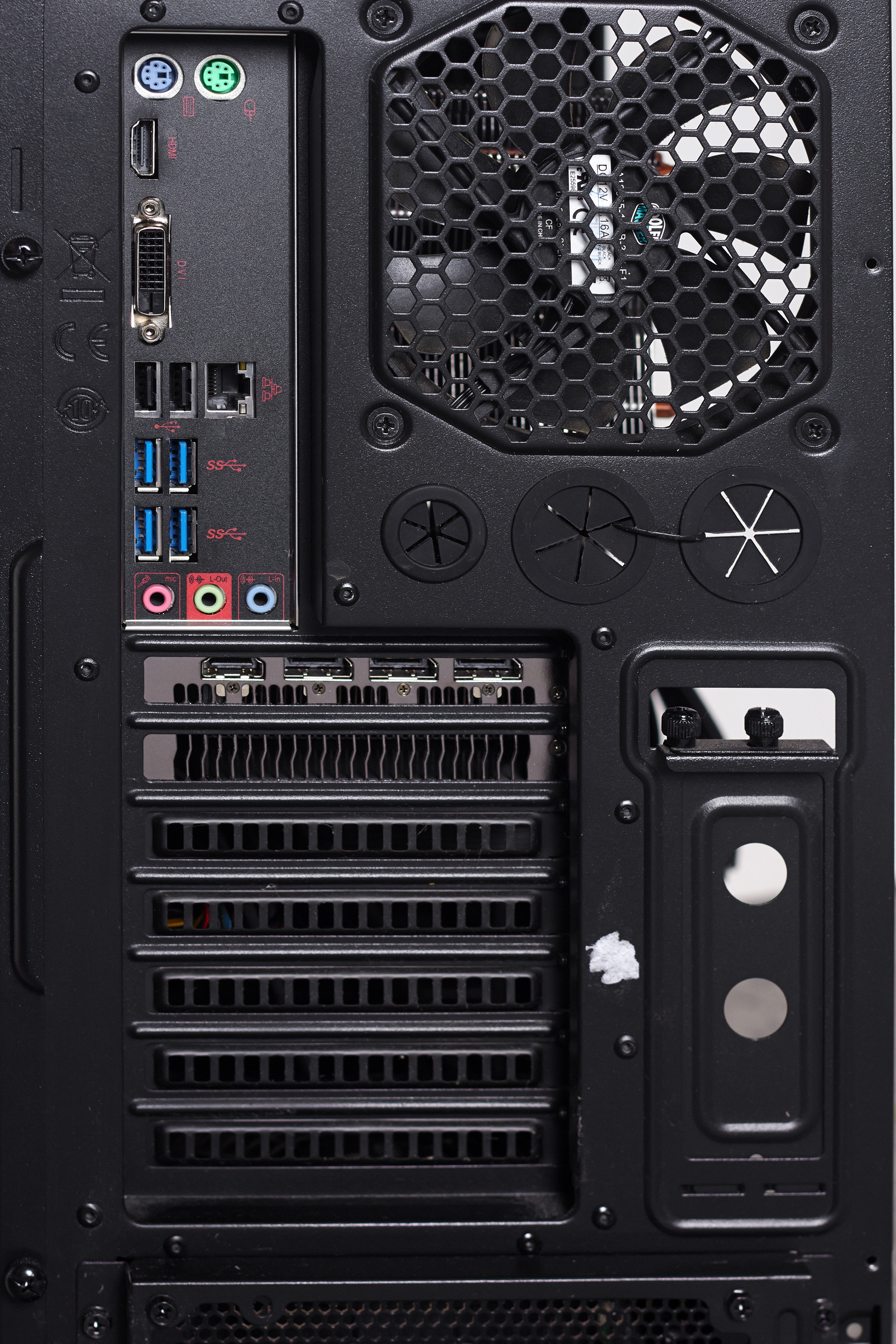
Computer ports can be found on the system unit and serves as points of connection to various peripheral devices via wired cabled or wireless transmission media.
A view of a system unit’s ports is shown below:
Output Devices And Ports
Video output to a computer monitor (or any other visual display unit [VDU]) can be achieved by sending signals from the system unit’s graphics circuits via specific display port over a cable and to the monitor/screen.
Two types of video ports are VGA and HDMI
VGA – Video Graphics Array
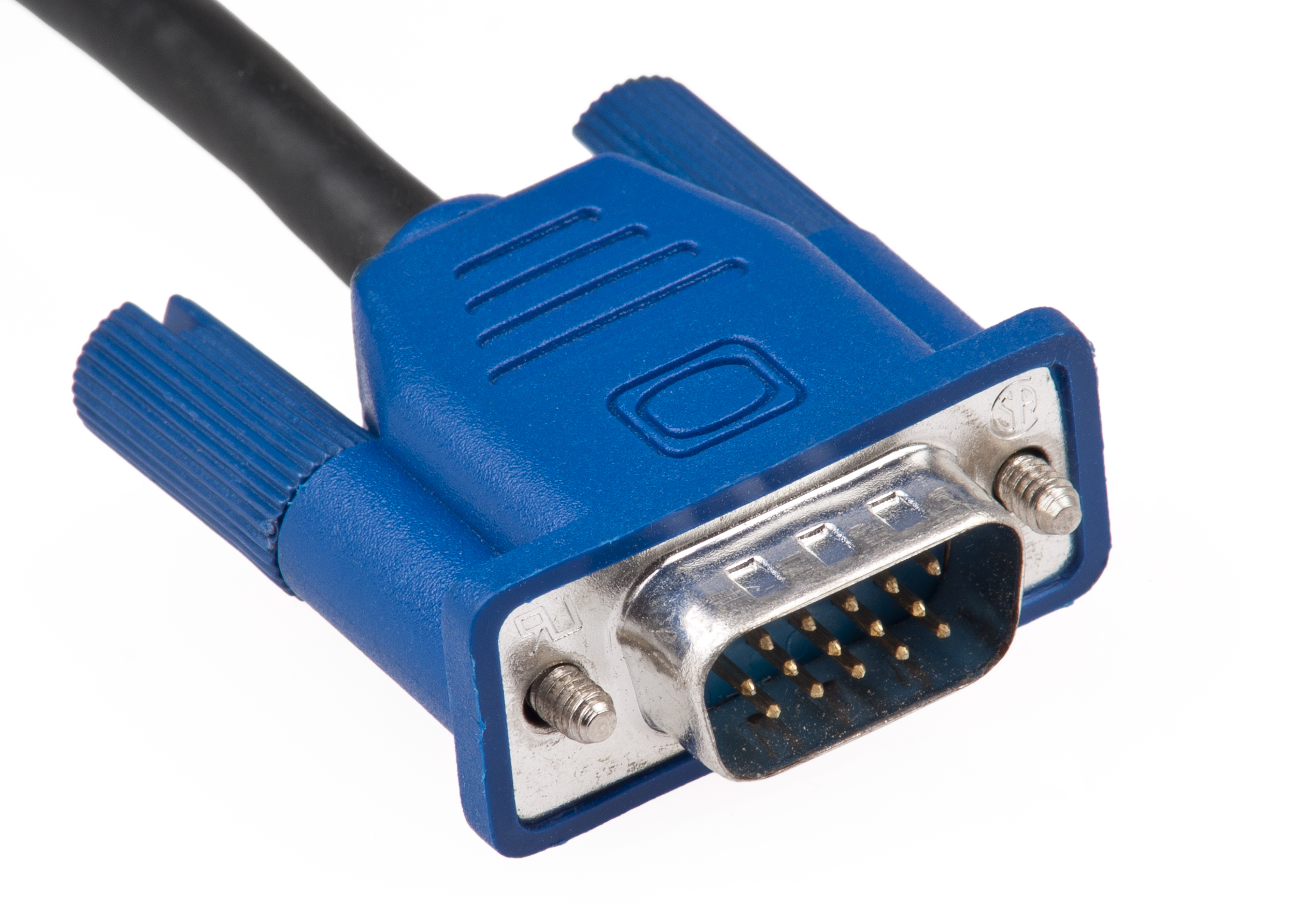
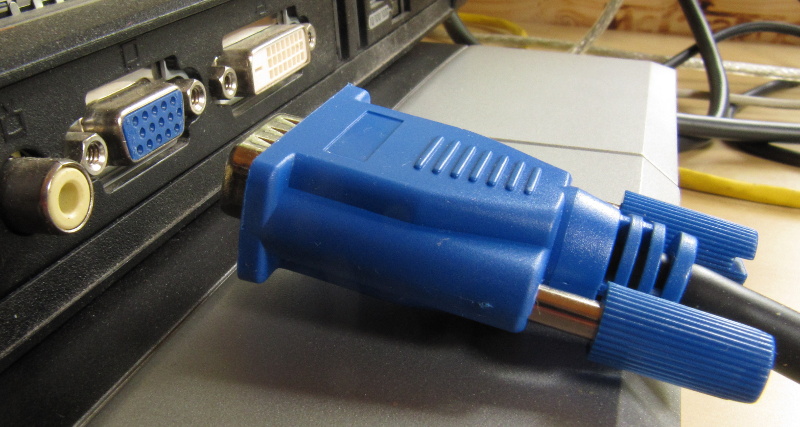
This technology has been around since 1978 , and is essentially a chipset for graphical display. A VGA cable connects one end to the system unit’s VGA port and the other to a VGA port on the VDU (Projector, computer monitor, Smart TV, etc)
The system unit’s VGA port is shown below:

Below is an image showing the end of the cable VGA Cable which connects the VGA Port:
Below is an image shown how the cable is intended to be connected via the port for our VGA technology:
Characteristics of VGA Technology
VGA technology,
- is affordable and the cheapest option. VGA only Devices are very cheap, as opposed to other devices that include HDMI etc.
- is widespread, popular and can be easily found world wide
- can display up to 256 colors
- Displays a reliable resolution for most applications, however other technologies can display sharper and clearer images at high resolution.
HDMI – High Definition Multimedia Interface
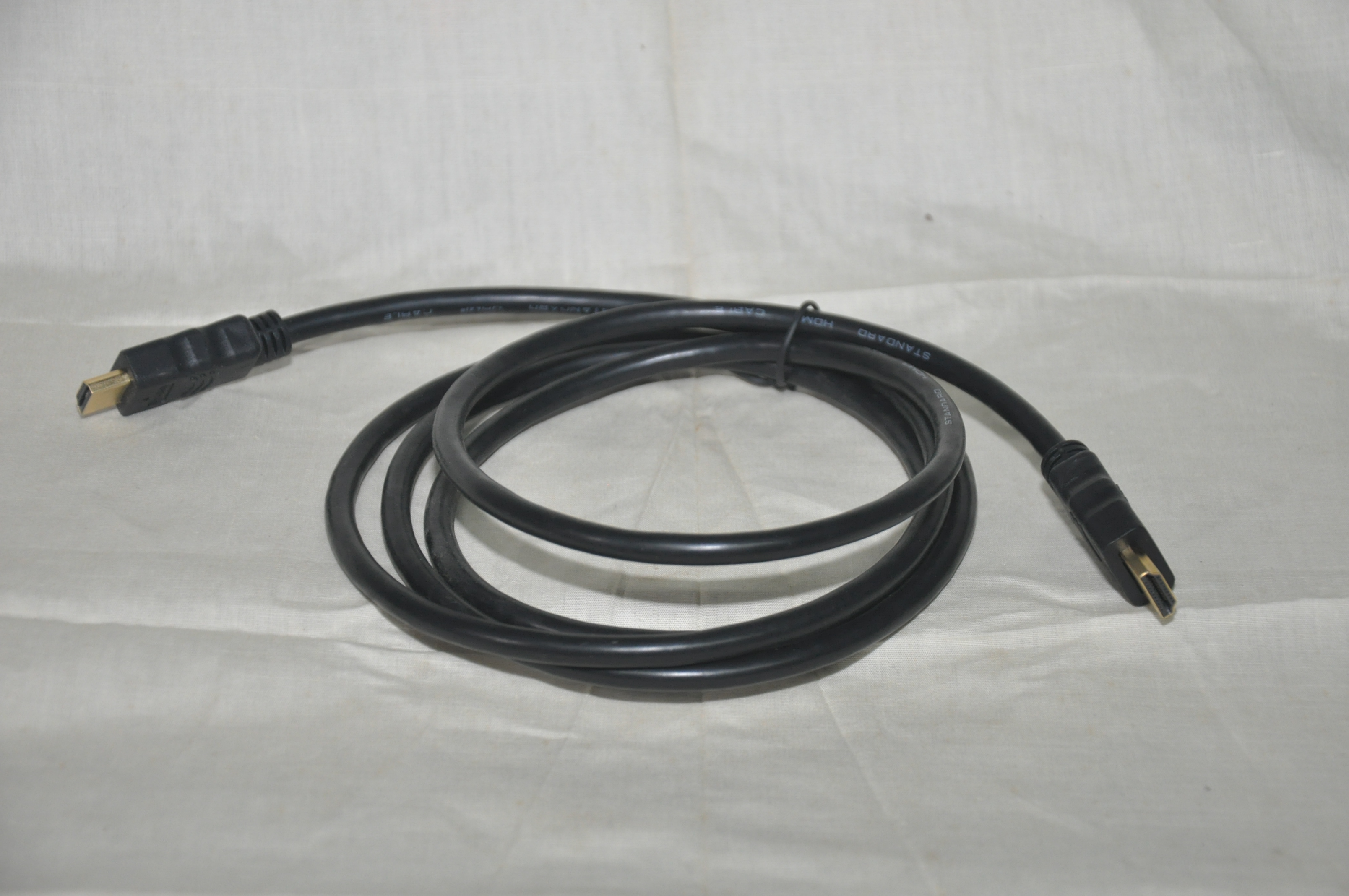
This is an another output technology which outputs high quality , high resolution video and sound via HDMI ports and cables. One cable’s end connects to the System unit’s hdmi port and the other to a VDU which can also output sound.
An image is shown below of an HDMI Cable:
An image is shown below of an HDMI Cable port on a VDU:

Communication Ports
Communication Ports allow for computer networking.
Ethernet port (RJ45)
This is a very common standard of networking which uses a wired cable connected via and ethernet port. The ethernet cable can be used to connect 2 PCs, or a pc to network hardware, or even one network to the next.
An image of an ethernet cable with a RJ45 connector end is shown next to a laptop’s RJ45 connector(Right). (The port on the left on the laptop is a RJ11 Connector used for land line phone connection):

A special type of port , USB – Universal Serial Bus
USB technology was developed with the intention to connect many device types to the computer system and/or each other via USB Ports and Cables. E.g networking 2 computer systems, connecting to game consoles to each other for playing videogames etc.
Devices include input , output , external storage devices, communications devices and specialized devices.
Input devices
Keyboard, Mouse, Graphics tablets
Output
Printers,VDUs, Audio
External storage devices
Flash Drives, External Hard Drives
Communications devices
Wireless Networking, Wireless Modems
Specialized devices
Security dongles, Video Cameras, Audio equipment, Midi Keyboards and Controllers.
Fire wire
Firewire is a standard similar to USB that was developed to connect multiple device types to the computer system.
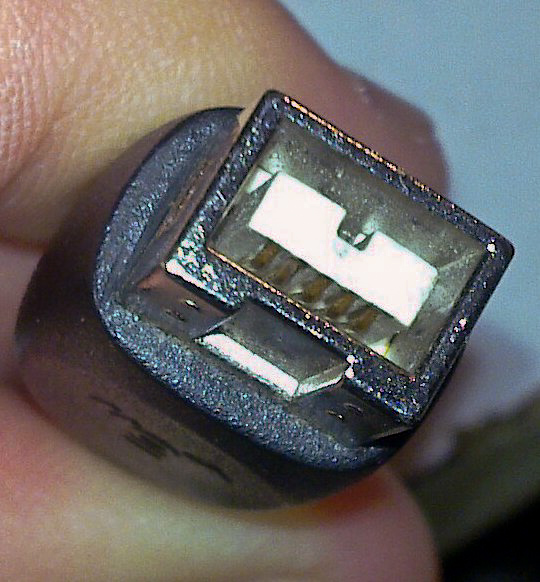
Below is an image of a firewire port:

A firewire cable end:
Internal Ports – SATA and IDE
Within the computer’s system unit various ports, connectors and cables are used to connect devices internally so that they can be manipulated by the computer system
Mass storage devices, such as optical disk drives and hard drives, are connected to the system using two types of technologies:
- IDE – Integrated Drive Electronics
- SATA – Serial Advanced Technology Attachment
IDE – Integrated Drive Electronics
This was an earlier technology which was created for mass storage via the device and a multi wired cable in the form of a ribbon. This method of data transfer uses “parallel communication”. (At this level we will not delve into what parallel communication is, more so that we note that it is a defining characteristic of the technology.)
An IDE Hard drive is shown below with a space of connection to the ribbon cable on the bottom left:

An IDE ribbon cable is shown below for connection to either the storage device or the computer system’s circuitry (motherboard):
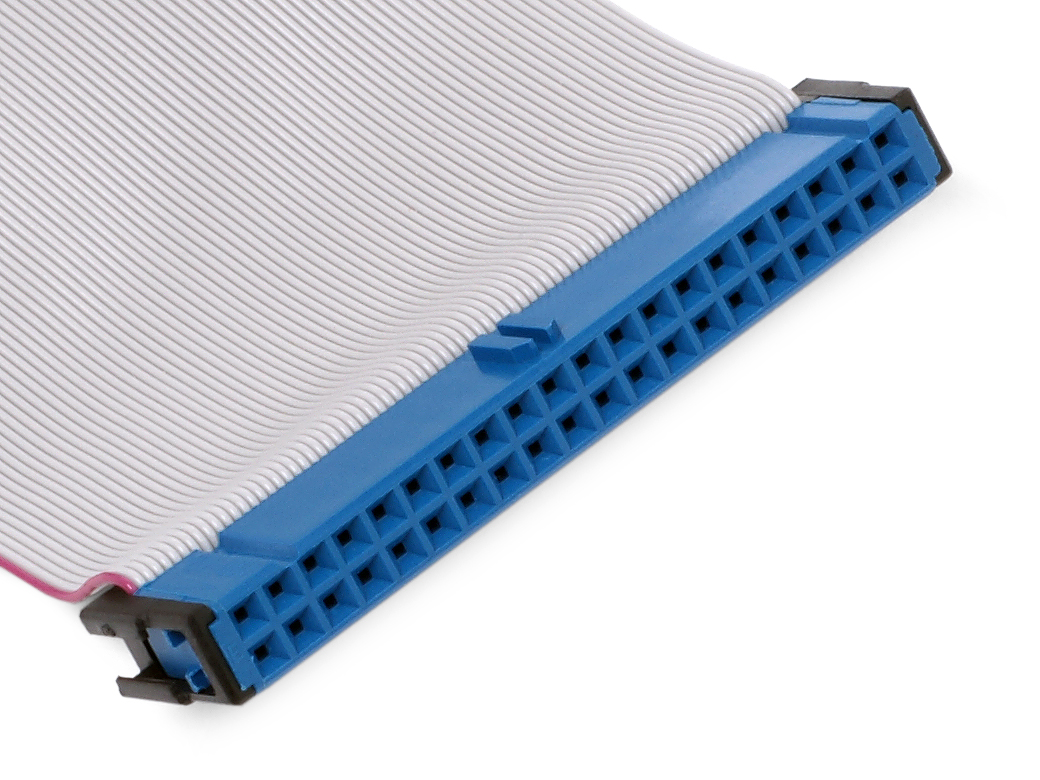
An IDE Connector on the computer system’s circuitry (motherboard)

SATA – Serial Advanced Technology Attachment
SATA was meant to be a an improvement over IDE Technology. SATA connects mass storage device via SATA Ports and Cabling. This method of data transfer uses “parallel communication”. By the nature of SATA Technology’s design it’s cabling is less bulky than IDE and less expensive making it more popular. Data transfer is much faster as compared to IDE with SATA transferring approximately 45 times faster than IDE Technology.
Below is a picture of a SATA hard drive:

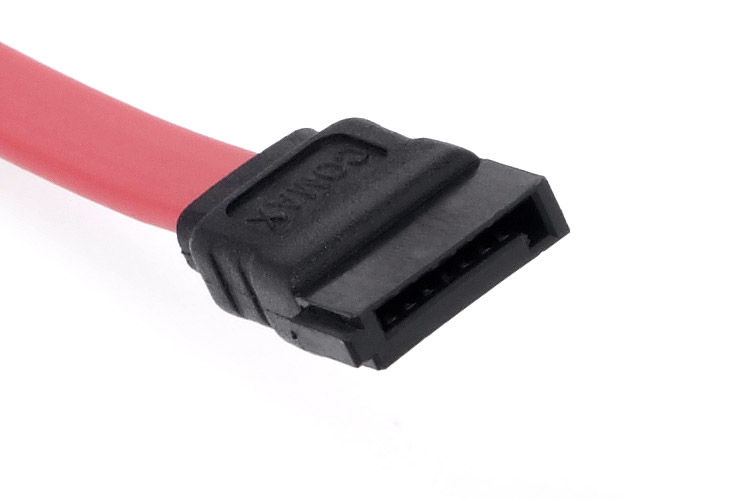
A SATA Data Cable
Below is an image of SATA Cables connected to the computer system’s circuitry (Motherboard)

UPDATES TO THIS POST
28th Sept 2022 – Added “Smart TV with a HDMI port” as an example for a VDU.
Attributions to media used in this post
- Dmitry Makeev, CC BY-SA 4.0, via Wikimedia Commons (https://upload.wikimedia.org/wikipedia/commons/2/24/ATX_Computer_cases%2C_back_view.jpg)
- Katsuki at English Wikipedia, CC BY-SA 3.0, via Wikimedia Commons
- Evan-Amos, Public domain, via Wikimedia Commons
(https://upload.wikimedia.org/wikipedia/commons/8/81/Vga-cable.jpg) - Hartmut.krummrei, CC BY-SA 3.0, via Wikimedia Commons
- Kannan shanmugam,shanmugam studio, Kollam, CC BY-SA 4.0, via Wikimedia Commons
- Kreuzschnabel, CC BY-SA 3.0, via Wikimedia Commons
- The original uploader was Hieke at German Wikipedia., Attribution, via Wikimedia Commons
- Amin, CC BY-SA 4.0, via Wikimedia Commons
- TheAnarcat, CC0, via Wikimedia Commons
- Leon Brooks, Public domain, via Wikimedia Commons
- Evan-Amos, Public domain, via Wikimedia Commons
- JulianVilla26, CC BY-SA 4.0, via Wikimedia Commons
- Fustigate314159, CC BY-SA 3.0, via Wikimedia Commons
- Evan-Amos, Public domain, via Wikimedia Commons
- Hardyplants, CC0, via Wikimedia Commons
© 2022 Vedesh Kungebeharry. All rights reserved.




 Island Class


