This is extra Social Studies revision for Infants 2, for children about 6 or 7 years old. It covers local foods, how food gets to our home, our Coat of Arms, our country’s leaders, class rules and children’s rights. Read each part with a grown-up. Then try the picture quiz and the quick quiz. There is a worksheet to print at the end.
If you hear no sound, check the volume, or try Chrome or Safari.
Part 1: Local foods
Local foods are what we grow or raise in our own country, Trinidad and Tobago.
Local foods are fresh, tasty and healthy. Buying local food also helps our farmers and families.

Local fruit
Mangoes, pawpaw, oranges and bananas grow right here in our warm sunshine.
Photo: Ivar Leidus, CC BY-SA 4.0, via Wikimedia Commons

Growing on the tree
Bananas and plantains grow in bunches on trees in gardens and farms.
Photo: Sowmiya Thangavel, CC BY-SA 4.0, via Wikimedia Commons
Ground provisions
Dasheen, cassava, yam and sweet potato grow in the ground. Tomatoes, pumpkin and chive grow in gardens too.
Not every food is local. Apples and grapes usually travel from faraway countries, while mangoes and dasheen are grown right here.
Part 2: From farm to our home
How does food reach your plate? Food is transported in three main steps, using trucks and vans on land or boats and ferries on water.
1. Farm or garden
First, farmers grow and pick the food on a farm or in a garden.

2. Market or grocery store
Next, the food is transported by truck, van or boat to the market or grocery store.
Photo: Kalamazadkhan, CC BY-SA 3.0, via Wikimedia Commons
3. Our home
Lastly, families buy the food and bring it to our home to wash, cook and eat.
Say the three steps in order: farm or garden, then market or grocery store, lastly our home.
Part 3: Our Coat of Arms and national emblems
The Coat of Arms is an official national emblem of Trinidad and Tobago. You can see it on government buildings, passports and official letters.

Our Coat of Arms
The scarlet ibis (for Trinidad) and the cocrico (for Tobago) hold the shield. Above are a palm tree and a ship’s wheel. Inside the shield are two hummingbirds and our gold steelpan. At the bottom is our motto: Together we aspire, together we achieve.
Photo: BaronJaguar, CC BY 4.0, via Wikimedia Commons

Steelpan
Our national instrument. It was invented in Trinidad and Tobago and sits proudly on our Coat of Arms.
Photo: Shanel, CC BY-SA 3.0, via Wikimedia Commons
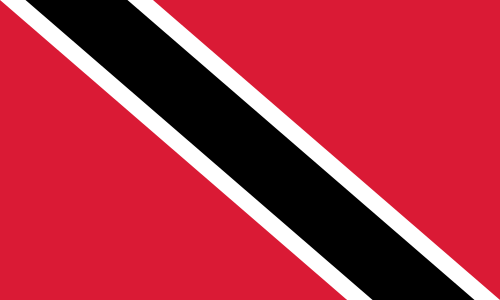
National flag
Red, white and black. Our other emblems include the scarlet ibis, the cocrico and the bright red chaconia flower.
Photo: Wikimedia Commons contributors, Public domain, via Wikimedia Commons

Scarlet ibis
The national bird of Trinidad, shown on the left side of our Coat of Arms. The brown cocrico, Tobago’s bird, stands on the right.
Photo: Bjørn Christian Tørrissen, CC BY-SA 3.0, via Wikimedia Commons
Remember: Together we aspire, together we achieve is our national motto on the Coat of Arms.
Part 4: Our country’s leaders
Trinidad and Tobago has leaders who help look after our country and make plans for everyone.
The President
Called Her Excellency or His Excellency. The President is our head of state. Our very first President was Sir Ellis Clarke.
The Prime Minister
Called The Honourable. The Prime Minister leads the government and works with ministers to run the country.

Minister of Finance and the National Budget
The Minister of Finance looks after the country’s money and reads the National Budget in Parliament, at the Red House. The National Budget is a plan telling the country where we get money from and how we will spend it.
Photo: David Stanley, CC BY 3.0, via Wikimedia Commons
Leaders change after elections, so we learn their titles here. You can ask a grown-up who our President, Prime Minister and Minister of Finance are today.
Part 5: Rules and children’s rights
Rules help every classroom and community work well. Every child also has important rights.
Why rules matter
Rules are important because they make us feel safe, make things fair and help us get along.
Class rule 1: Listen
Listen carefully when the teacher or a classmate is talking.
Class rule 2: Be kind
Be kind to others, like sharing, taking turns and using polite words.
Right to a home
Every child has the right to a safe home.
Right to a family
Every child has the right to a caring family.
Right to an education
Every child has the right to an education, to go to school and learn.
Say three rights of every child: to have a home, to have a family and to have an education.
Picture quiz
PICTURESTap the picture
Read the question, then tap the right picture. If you are not sure, try again.
The picture quiz needs JavaScript. Look back at the pictures above and name each one with a grown-up.
Quick quiz
QUIZHave a go
Tap the right answer. If you are not sure, try again.
My completion badge
Help and retries are welcome. This badge celebrates finishing, not a perfect score.
Here is the Quick quiz without the games. Say your answer, then tap Show answer.
1. What are local foods?
- a) Foods we grow or raise in our own country
- b) Only foods bought from faraway countries
- c) Toys made out of plastic
Show answer
Local foods are what we grow in our own country, like mangoes, bananas and dasheen.
2. Which list shows the right order for how food gets to us?
- a) Farm or garden, then market or grocery store, lastly our home
- b) Our home, then farm, then grocery store
- c) Grocery store, then farm, then market
Show answer
Food is transported from a farm or garden, then to the market or grocery store, and lastly to our home.
3. Which is an example of a local food grown in Trinidad and Tobago?
- a) dasheen
- b) snow
- c) an ice skate
Show answer
Dasheen, mangoes, bananas and cassava are grown locally.
4. Which musical instrument appears inside our Coat of Arms?
- a) the steelpan
- b) the piano
- c) the violin
Show answer
The gold steelpan is on the shield of our Coat of Arms.
5. Which two national birds hold the shield on our Coat of Arms?
- a) the scarlet ibis and the cocrico
- b) an eagle and a duck
- c) a penguin and an owl
Show answer
The scarlet ibis and the cocrico stand on either side of the shield.
6. What is the motto written at the bottom of our Coat of Arms?
- a) Together we aspire, together we achieve
- b) Fast and furious
- c) Work alone every day
Show answer
Our national motto is Together we aspire, together we achieve.
7. Which leader presents the National Budget for the country?
- a) the Minister of Finance
- b) the crossing guard
- c) the baker
Show answer
The Minister of Finance presents the National Budget, telling where we get money from and how we will spend it.
8. Which leader is the head of state, called Her Excellency or His Excellency?
- a) the President
- b) the Prime Minister
- c) the school monitor
Show answer
The President is our head of state. Our first President was Sir Ellis Clarke.
9. Why are rules important in our classroom?
- a) They make us feel safe, make things fair and help us get along
- b) They stop children from ever smiling
- c) They make games harder to understand
Show answer
Rules keep us safe, make things fair and help everyone get along.
10. Which group lists three rights of every child?
- a) to have a home, a family and an education
- b) to drive a truck, stay up all night and skip school
- c) to own a shop, a plane and a boat
Show answer
Every child has the right to a home, a family and an education.
When JavaScript is off, use these questions and celebrate finishing together. Progress cannot be saved here.
Social Studies revision: Local Foods, Our Coat of Arms and Leaders — worksheet
Name: ______________________
Point, draw, say or write. An adult can write for you.
- Complete the sentence.
- Local foods are what we ________________ in our own country.
- Name two local foods: 1) ________________ 2) ________________
- Number the steps from 1 to 3 to show how food reaches us:
- (a) ____ Market or grocery store
- (b) ____ Our home
- (c) ____ Farm or garden
- Look at our Coat of Arms and fill in the missing words:
- (a) The national instrument on the shield is the ________________.
- (b) The two national birds holding the shield are the ________________ and the ________________.
- (c) Our national motto is: Together we aspire, together we ________________.
- Match each leader to their job. Write the letter on the line.
- (a) The President ____
- (b) The Prime Minister ____
- (c) The Minister of Finance ____
- Options:
- A. Leads the government
- B. Presents the National Budget
- C. Is our head of state (Her or His Excellency)
- Finish the lists.
- (a) Why are rules important? They make us feel ________, make things ________ and help us get ________.
- (b) Write three rights of every child: to have a ________, a ________ and an ________.
Answers for the grown-up
1. grow (or raise); examples: mangoes, bananas, dasheen, cassava, tomatoes, sweet potatoes. 2. (a) 2, (b) 3, (c) 1. 3. (a) steelpan (b) scarlet ibis, cocrico (c) achieve. 4. (a) C, (b) A, (c) B. 5. (a) safe, fair, along (b) home, family, education.
Words to know
Say these words with a grown-up. Can you use each one in a sentence?
local food · farm · garden · market · grocery store · transported · Coat of Arms · steelpan · hummingbirds · motto · President · Prime Minister · Minister of Finance · National Budget · Parliament · rules · safe · fair · sharing · rights · home · family · education
Try it at home
- Look in your kitchen or at the market with a grown-up and name three local foods grown in our country.
- Pick one fruit or vegetable you ate today and trace its journey: farm or garden, market or grocery store, our home.
- Look at a picture of our Coat of Arms and point to the scarlet ibis, the cocrico, the hummingbirds, the steelpan and the motto.
- Say one class rule that helps everyone stay safe and get along, and thank someone in your family for caring for your home.
For parents and teachers
This is extra Infants 2 Social Studies revision. After this post, your child should be able to:
- explain what local foods are and name examples such as mangoes, bananas, dasheen and cassava
- put the three steps of food transport in order: farm or garden, market or grocery store, our home
- recognise our Coat of Arms and name its parts (scarlet ibis, cocrico, hummingbirds, steelpan and motto)
- distinguish the roles of the President, Prime Minister and Minister of Finance, and say what the National Budget is
- explain why rules are important and name three rights of every child (a home, a family and an education)
This post builds on the two earlier Infants 2 Social Studies revision posts (Directions, Our Country and My School, and Special Days and Festivals) using new topics from recent classwork.
The Coat of Arms shown is the updated design with the gold steelpan on the shield. Older textbooks may still show the earlier three-ships design.
The names of the current President, Prime Minister and Minister of Finance change over time, so general titles are used here. You can name today’s officeholders together from the news.
Every family and home looks a little different; talk warmly about the people and safe places that care for your child.
The read-aloud uses the device speech voice. Quiz scores and the badge stay in this browser only. No login.
Back to Infants 2 Social Studies
See all Revision Exercises →
Image credits
Photographs are from Wikimedia Commons and are shown here as links to the original files.
- mango: Mangos – single and halved, Ivar Leidus, CC BY-SA 4.0, via Wikimedia Commons
- bananas on a tree: Banana tree with banana bunch, Sowmiya Thangavel, CC BY-SA 4.0, via Wikimedia Commons
- market in San Fernando: San Fernando, Trinidad and Tobago, Kalamazadkhan, CC BY-SA 3.0, via Wikimedia Commons
- Coat of Arms: Coat of arms of Trinidad and Tobago (2025), BaronJaguar, CC BY 4.0, via Wikimedia Commons
- steelpan: Pan player, Shanel, CC BY-SA 3.0, via Wikimedia Commons
- our national flag: Flag of Trinidad and Tobago, Wikimedia Commons contributors, Public domain, via Wikimedia Commons
- scarlet ibis: Eudocimus Ruber Wading KL, Bjørn Christian Tørrissen, CC BY-SA 3.0, via Wikimedia Commons
- the Red House: Red House of Trinidad and Tobago, David Stanley, CC BY 3.0, via Wikimedia Commons


Updates
2026/11/24
– First version of this extra Infants 2 Social Studies revision, with pictures, read-aloud, a picture quiz, a quick quiz and a worksheet.