This is extra Social Studies revision for Infants 2, for children about 6 or 7 years old. Read each part with a grown-up. Look at the pictures. Then try the picture quiz and the quick quiz. There is a worksheet to print at the end.
If you hear no sound, check the volume, or try Chrome or Safari.
Part 1: Which way?
Directions tell us where people and things are. Arrows can point four ways.
up
The arrow points up.
down
The arrow points down.
left
The arrow points left.
right
The arrow points right.
A compass is a tool that shows directions. It helps us find places easily.
Part 2: The four cardinal points
The four main cardinal points are North, South, East and West. They help us find our way if we get lost. On a compass, North is at the top.

N, S, E, W
North is up. South is down. West is on the left. East is on the right.
Picture: Henrik, CC BY-SA 3.0, via Wikimedia Commons
Say this poem with a grown-up:
The sun rises in the East.
The sun sets in the West.
The sun does not really move: the Earth turns.
When I face the East with my arms stretched out,
my left arm points North,
my right arm points South,
and my back is to the West.
Part 3: Where is it?
Look at the map. The tree is in the middle.
- The school is to the North of the tree.
- The boy is to the South of the tree.
- The house is to the West of the tree.
- The bus is to the East of the tree.
Part 4: Getting around
Transport is how people and things move from place to place. We travel on land, on the sea and in the air.

land
A maxi-taxi, a car and a bus go on land.
Photo: Zagaboy, CC0, via Wikimedia Commons

sea
A ferry, a boat and a ship go on the sea.
Photo: Kalamazadkhan, CC BY-SA 4.0, via Wikimedia Commons

air
An aeroplane and a helicopter go in the air.
Photo: BhuyanBhaskar, CC BY 4.0, via Wikimedia Commons
Part 5: Independence Day
The name of our country is the Republic of Trinidad and Tobago.
31 August
We celebrate Independence Day on the 31st of August every year. It is a national holiday.
Parades
Bands and groups march in parades.
Fireworks
We watch fireworks light up the sky at night.
On 31 August we became independent. That means we make our own laws and choose our own leaders.
Part 6: Republic Day
We celebrate Republic Day on the 24th of September every year.
24 September
Republic Day is on the 24th of September.
Our own President
When we became a republic, our own President took the place of the Queen of England.
The first President
Our first President was Sir Ellis Clarke.
National Awards
National Awards are given out on Republic Day to people who have helped our country.
Part 7: Our national emblems
National emblems are special symbols of our country. They make us proud.
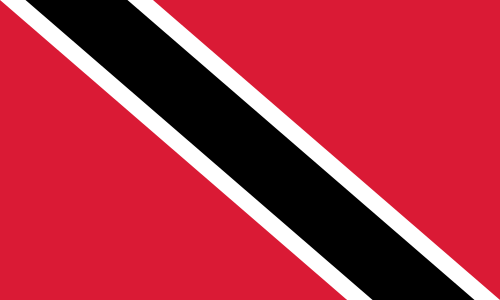
The national flag
Our flag is red, white and black. Red is for the warm sun and our happy, lively people. White is for the sea and for all people being equal. Black stands for the earth and its riches, and the strength of our people.
Photo: Wikimedia Commons contributors, Public domain, via Wikimedia Commons

Scarlet ibis
The national bird of Trinidad. It is bright red. You can see it in the Caroni Swamp.
Photo: Clément Bardot, CC BY-SA 4.0, via Wikimedia Commons

Cocrico
The national bird of Tobago. It is brown. It is also called the Tobago pheasant.
Photo: Francesco Veronesi from Italy, CC BY-SA 2.0, via Wikimedia Commons

Chaconia
Our national flower. It is bright red and grows in the forest. It blooms around Independence time.
Photo: Albert Sydney, CC BY-SA 3.0, via Wikimedia Commons

Steelpan
Our national instrument. It is made from an oil drum. It was invented in Laventille, Trinidad. Winston “Spree” Simon was the first person to play a tune on it.
Photo: Shanel, CC BY-SA 3.0, via Wikimedia Commons
The scarlet ibis and the cocrico are protected by law. Nobody is allowed to hunt them.
Part 8: Our motto and watchwords
Our national motto is: Together we aspire, together we achieve. It means that when we work together, we can reach our goals.
Our national watchwords are three words to help us live well together.
Discipline
Good behaviour.
Production
To make or to create.
Tolerance
Acceptance: we accept and respect people who are different from us.
Part 9: Budget Day
A budget is a plan for how to spend and save money for a period of time.
A family budget
A family can plan what to buy and how much to save.

The National Budget
The National Budget tells the country where the Government will get money and how it will spend it. The Minister of Finance reads it in Parliament, at the Red House.
Photo: David Stanley, CC BY 3.0, via Wikimedia Commons
Part 10: My awesome school
La escuela means the school in Spanish.
A good school is clean and beautiful. The children are kind, helpful and respectful. They have good manners and follow the rules.
Listen
I listen and follow instructions.
Use good manners
I always say please, thank you and excuse me.
Tell the truth
I always tell the truth.
Walk, do not run
I do not run or play rough in the classroom.
Keep it clean
I put all garbage in the bin and keep my books and classroom neat.
Be kind
We must be kind to each other.
Picture quiz
PICTURESTap the picture
Read the question, then tap the right picture. If you are not sure, try again.
The picture quiz needs JavaScript. Look back at the pictures above and name each one with a grown-up.
Quick quiz
QUIZHave a go
Tap the right answer. If you are not sure, try again.
My completion badge
Help and retries are welcome. This badge celebrates finishing, not a perfect score.
Here is the Quick quiz without the games. Say your answer, then tap Show answer.
1. Independence Day is on …
- a) 31 August
- b) 24 September
- c) 25 December
Show answer
Independence Day is on the 31st of August.
2. Republic Day is on …
- a) 24 September
- b) 31 August
- c) 1 November
Show answer
Republic Day is on the 24th of September.
3. Who was our first President?
- a) Sir Ellis Clarke
- b) Winston Spree Simon
- c) the Queen of England
Show answer
Sir Ellis Clarke was our first President.
4. The sun rises in the …
- a) East
- b) West
- c) North
Show answer
The sun rises in the East and sets in the West.
5. I face the East and stretch out my arms. My left arm points …
- a) North
- b) South
- c) West
Show answer
My left arm points North. My right arm points South.
6. What are the colours of our flag?
- a) red, white and black
- b) red, yellow and green
- c) blue, white and black
Show answer
Our flag is red, white and black.
7. What does tolerance mean?
- a) accepting others
- b) making things
- c) good behaviour
Show answer
Tolerance means accepting others.
8. Who reads the National Budget?
- a) the Minister of Finance
- b) the President
- c) the teacher
Show answer
The Minister of Finance reads the budget.
9. A budget is a plan to …
- a) spend and save money
- b) play a game
- c) sing a song
Show answer
A budget is a plan to spend and save money.
10. True or false? We must put all garbage in bins.
- a) True
- b) False
Show answer
True. Garbage goes in the bin.
When JavaScript is off, use these questions and celebrate finishing together. Progress cannot be saved here.
Social Studies revision: Directions, Our Country and My School — worksheet
Name: ______________________
Point, draw, say or write. An adult can write for you.
- Draw an arrow for each word.
- (a) up
- (b) down
- (c) left
- (d) right
- Fill in the missing words.
- (a) The sun rises in the ____________.
- (b) The sun sets in the ____________.
- Look at the map. Fill in North, South, East or West.
school house tree bus boy - (a) The house is to the ____________ of the tree.
- (b) The bus is to the ____________ of the tree.
- (c) The school is to the ____________ of the tree.
- (d) The boy is to the ____________ of the tree.
- Write land, sea or air.
- (a) ferry ____________
- (b) maxi-taxi ____________
- (c) aeroplane ____________
- Circle the date of Republic Day.
- a) 31 August
- b) 24 September
- c) 25 December
- Circle the answer. On which day are National Awards given out?
- a) Republic Day
- b) Christmas Day
- c) Literacy Day
- Write the three colours of our flag. Then draw and colour the flag.
- Match each bird to its island.
- (a) scarlet ibis → ____________
- (b) cocrico → ____________
- What is our national instrument? ____________
- What do our watchwords mean?
- (a) Discipline means ____________
- (b) Production means ____________
- (c) Tolerance means ____________
- A budget is a plan to ____________ and ____________ money.
- Write True or False.
- (a) We must put all garbage in bins. ____________
- (b) We must not be kind to each other. ____________
- (c) Do not run in the classroom. ____________
- (d) I must listen and follow instructions. ____________
Answers for the grown-up
2. (a) East (b) West. 3. (a) West (b) East (c) North (d) South. 4. (a) sea (b) land (c) air. 5. b. 6. a. 7. red, white and black. 8. (a) Trinidad (b) Tobago. 9. the steelpan. 10. (a) good behaviour (b) to make or create (c) acceptance. 11. spend, save. 12. (a) True (b) False (c) True (d) True.
Words to know
Say these words with a grown-up. Can you use each one in a sentence?
directions · compass · North · South · East · West · transport · Independence · Republic · President · national emblem · motto · watchwords · discipline · production · tolerance · budget · Minister of Finance · manners · rules
Try it at home
- Stand outside in the morning and face the rising sun. That is East! Stretch out your arms: left is North, right is South, and your back is to the West.
- Draw and colour our flag. Tell a grown-up what each colour stands for.
- Find 31 August and 24 September on a calendar and circle them.
- Talk about one school rule you keep every day.
For parents and teachers
This is extra Infants 2 Social Studies revision. After this post, your child should be able to:
- say up, down, left and right, and name the four cardinal points
- tell where a place is (north, south, east or west of something)
- name land, sea and air transport
- give the dates of Independence Day and Republic Day and how we celebrate them
- name the national flag, birds, flower and instrument, the motto and the three watchwords
- say what a budget is and who reads the National Budget
- describe good manners and rules at school
The flag meanings are given in simple words. Black stands for the earth and its riches, and the strength of our people, so a child who says “the earth” is right.
The watchwords, Budget Day and the school rules go a little beyond our eight Infants 2 Social Studies lessons. They are included because many Infants 2 classes cover them.
The names of the current Prime Minister, President and Minister of Finance change over time, so they are not included. You can add them together from today’s news.
The read-aloud uses the device speech voice. Quiz scores and the badge stay in this browser only. No login.
Back to Infants 2 Social Studies
See all Revision Exercises →
Image credits
Photographs are from Wikimedia Commons and are shown here as links to the original files.
- compass rose: Compass rose simple, Henrik, CC BY-SA 3.0, via Wikimedia Commons
- maxi-taxi: Maxitaxi new, Zagaboy, CC0, via Wikimedia Commons
- ferry: Intra-island ferries – Trinidad, West Indies, Kalamazadkhan, CC BY-SA 4.0, via Wikimedia Commons
- aeroplane: Flying Airplane in the Sky, BhuyanBhaskar, CC BY 4.0, via Wikimedia Commons
- our national flag: Flag of Trinidad and Tobago, Wikimedia Commons contributors, Public domain, via Wikimedia Commons
- scarlet ibis: Ibis rouge (Eudocimus ruber), Clément Bardot, CC BY-SA 4.0, via Wikimedia Commons
- cocrico: Rufous-vented Chachalaca – Tobago, Francesco Veronesi from Italy, CC BY-SA 2.0, via Wikimedia Commons
- chaconia: The Chaconia Flower, Trinidad (Warszewiczia coccinea), Albert Sydney, CC BY-SA 3.0, via Wikimedia Commons
- steelpan: Pan player, Shanel, CC BY-SA 3.0, via Wikimedia Commons
- the Red House: Red House of Trinidad and Tobago, David Stanley, CC BY 3.0, via Wikimedia Commons


Updates
2026/11/18
– First version of this extra Infants 2 Social Studies revision, with pictures, read-aloud, a picture quiz, a quick quiz and a worksheet.
– Black on the flag now stands for the earth and its riches, and the strength of our people.
– Bigger pictures in the picture quiz, side by side on tablets and laptops.