DEMO • SPANISH • PRETERITE
The preterite (in Spanish, el pretérito) is a past tense. We use it for actions that started and finished in the past, often at a clear time: yesterday, last night, last year. For example, Ayer comí pelau means “Yesterday I ate pelau”. The eating is over and done.
In this lesson you will learn the regular endings for -ar, -er and -ir verbs, some very common irregular verbs, the spelling changes in the yo form, and the time words that tell you to use the preterite. Then you can practise with the Try it activity and the questions at the end.

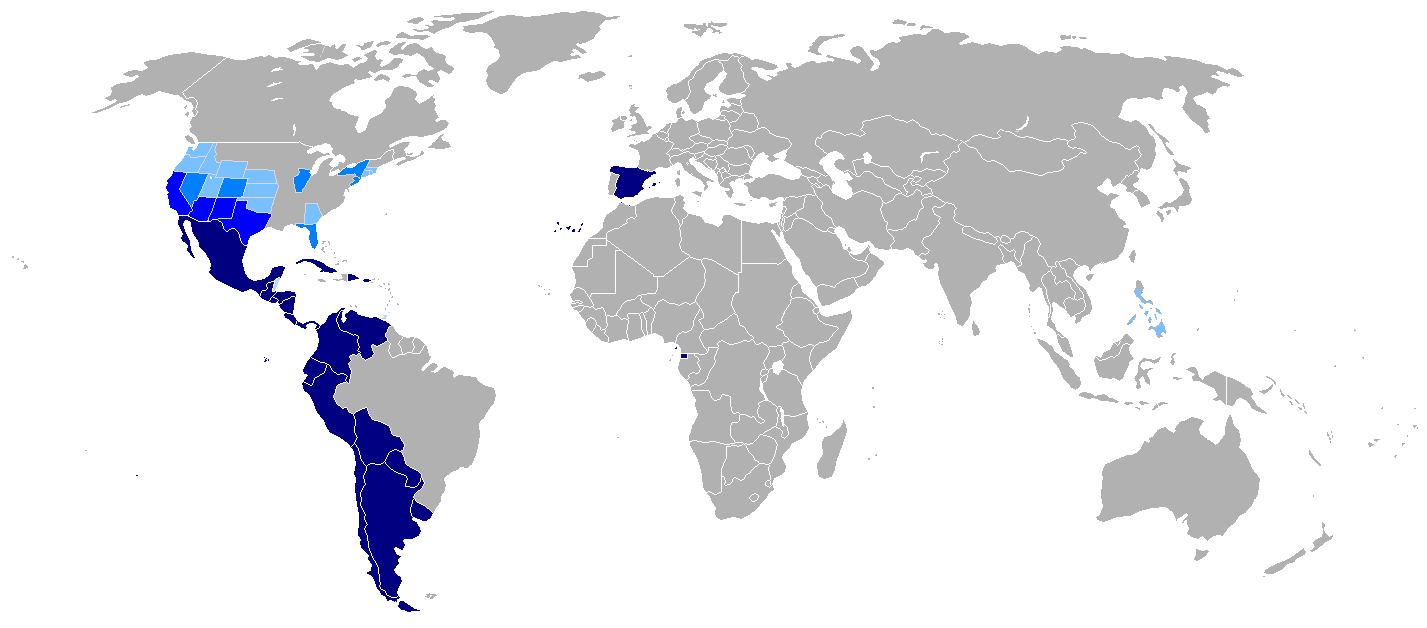
Credit: Onofre Bouvila, public domain, via Wikimedia Commons.

When do we use the preterite?
- For a completed action at a definite time in the past: Anoche vi una película. (Last night I watched a film.)
- For a series of actions one after the other: Me levanté, comí y fui a la escuela. (I got up, ate and went to school.)
- For an action that lasted a fixed amount of time and then ended: Viví en Arima dos años. (I lived in Arima for two years.)
Regular -ar verbs
Take the infinitive, remove -ar to get the stem (hablar → habl-), then add the ending. Look out for the accents on the yo and él / ella / usted forms.
| Pronoun | Ending | hablar |
|---|---|---|
| yo | -é | hablé |
| tú | -aste | hablaste |
| él, ella, usted | -ó | habló |
| nosotros | -amos | hablamos |
| vosotros | -asteis | hablasteis |
| ellos, ellas, ustedes | -aron | hablaron |
Regular -er and -ir verbs
Good news: -er and -ir verbs share the same preterite endings. Remove -er or -ir and add the ending.
| Pronoun | Ending | comer |
|---|---|---|
| yo | -í | comí |
| tú | -iste | comiste |
| él, ella, usted | -ió | comió |
| nosotros | -imos | comimos |
| vosotros | -isteis | comisteis |
| ellos, ellas, ustedes | -ieron | comieron |
| Pronoun | Ending | vivir |
|---|---|---|
| yo | -í | viví |
| tú | -iste | viviste |
| él, ella, usted | -ió | vivió |
| nosotros | -imos | vivimos |
| vosotros | -isteis | vivisteis |
| ellos, ellas, ustedes | -ieron | vivieron |
Tip: the nosotros form of -ar and -ir verbs is the same in the present and the preterite (hablamos, vivimos). A time word like ayer tells you which one is meant.
See the pattern: a picture chart of correr
The chart below shows the regular -er verb correr (to run). Read it row by row: each row is one person (yo, tú, él / ella / usted, nosotros, vosotros, ellos / ellas / ustedes). The left column, with the setting sun, is the preterite: corrí, corriste, corrió, corrimos, corristeis, corrieron. The middle column (sun) is the present and the right column (moon) is the future. Compare the left column with the comer table above: the endings are the same.


Credit: Serg!o (original) and Nyq (vector), CC BY-SA 4.0, via Wikimedia Commons.

Key irregular verbs
Some of the most used verbs do not follow the pattern. You need to learn these by heart.
Ser (to be) and ir (to go)
Ser and ir have exactly the same forms in the preterite. The rest of the sentence tells you which verb it is: Fui a Tobago (I went to Tobago) and Fue un buen día (It was a good day).
| Pronoun | ser / ir |
|---|---|
| yo | fui |
| tú | fuiste |
| él, ella, usted | fue |
| nosotros | fuimos |
| vosotros | fuisteis |
| ellos, ellas, ustedes | fueron |
Hacer, tener and estar
These verbs change their stem and use special endings with no accents: -e, -iste, -o, -imos, -isteis, -ieron. Note that hacer becomes hizo (with a z) in the él / ella / usted form.
| Pronoun | hacer | tener |
|---|---|---|
| yo | hice | tuve |
| tú | hiciste | tuviste |
| él, ella, usted | hizo | tuvo |
| nosotros | hicimos | tuvimos |
| vosotros | hicisteis | tuvisteis |
| ellos, ellas, ustedes | hicieron | tuvieron |
| Pronoun | estar |
|---|---|
| yo | estuve |
| tú | estuviste |
| él, ella, usted | estuvo |
| nosotros | estuvimos |
| vosotros | estuvisteis |
| ellos, ellas, ustedes | estuvieron |
Dar and ver
Dar (to give) and ver (to see) are short verbs. Their forms have no written accents, and dar uses -er/-ir endings even though it is an -ar verb.
| Pronoun | dar | ver |
|---|---|---|
| yo | di | vi |
| tú | diste | viste |
| él, ella, usted | dio | vio |
| nosotros | dimos | vimos |
| vosotros | disteis | visteis |
| ellos, ellas, ustedes | dieron | vieron |
Spelling changes in the yo form: -car, -gar, -zar
Verbs ending in -car, -gar and -zar change their spelling only in the yo form, so that the sound stays the same. All the other forms are regular.
| Ending | Change | Example (yo) |
|---|---|---|
| -car | c → qu | buscar → busqué |
| -gar | g → gu | llegar → llegué |
| -zar | z → c | empezar → empecé |
More examples: tocar → toqué, jugar → jugué, almorzar → almorcé. But él buscó, llegó and empezó are regular.
Time markers
These words and phrases often signal that you need the preterite:
- ayer – yesterday
- anoche – last night
- anteayer – the day before yesterday
- la semana pasada – last week
- el mes pasado – last month
- el año pasado – last year
- hace dos días – two days ago (hace + time = ago)
- el lunes, el sábado – on Monday, on Saturday
Worked examples
Example 1. Ayer (yo) ___ con mi profesora. (hablar)
Step 1: hablar is a regular -ar verb, so the stem is habl-.
Step 2: the yo ending is -é.
Answer: Ayer hablé con mi profesora. – Yesterday I spoke with my teacher.
Example 2. Anoche (nosotros) ___ roti en casa. (comer)
-er verb, stem com-, nosotros ending -imos.
Answer: Anoche comimos roti en casa. – Last night we ate roti at home.
Example 3. El año pasado mi familia ___ a Tobago. (ir)
Ir is irregular. Mi familia is ella (third person singular), so we use fue.
Answer: El año pasado mi familia fue a Tobago. – Last year my family went to Tobago.
Example 4. Hace dos días (yo) ___ la tarea de matemáticas. (hacer)
Irregular stem hic-, ending -e with no accent.
Answer: Hace dos días hice la tarea de matemáticas. – Two days ago I did the maths homework.
Example 5. La semana pasada (yo) ___ a la escuela a las siete. (llegar)
-gar verb, so the yo form changes g → gu.
Answer: La semana pasada llegué a la escuela a las siete. – Last week I arrived at school at seven.
Example 6. ¿(Tú) ___ el partido anoche? (ver)
Ver is irregular with no accents.
Answer: ¿Viste el partido anoche? – Did you watch the match last night?
Common mistakes
- Leaving out the accent. hablo means “I speak” (present) but habló means “he / she spoke” (preterite). The accent changes the meaning.
- Adding accents to irregular forms. fui, fue, di, dio, vi, vio, hice, hizo, tuve, tuvo, estuve, estuvo have no written accents.
- Forgetting the spelling change. Write busqué, llegué and empecé, not “buscé”, “llegé” or “empezé”.
- Mixing up ser and ir. Fue can mean “he went” or “it was”. Read the whole sentence: a + a place usually means ir.
- Using the -ar ending for -er and -ir verbs. It is comí and viví, not “comé” or “vivé”.
Activity 1: Try it
TRY ITConjugate it
Pick a verb and a subject, then type the preterite form (just the verb) and press Check. Use the accent buttons if your keyboard has no accents.
Activity 2: Fill in the blanks
Write the correct preterite form of the verb in brackets. Try all ten in your copybook first, then open each answer to check.
1. Ayer yo ___ con mi abuela por teléfono. (hablar)
Show answer
hablé – Yesterday I spoke with my grandmother on the phone.
2. Anoche nosotros ___ pelau en casa. (comer)
Show answer
comimos – Last night we ate pelau at home.
3. El año pasado mis primos ___ en San Fernando. (vivir)
Show answer
vivieron – Last year my cousins lived in San Fernando.
4. ¿Tú ___ a la playa el sábado? (ir)
Show answer
fuiste – Did you go to the beach on Saturday?
5. Yo ___ la tarea anoche. (hacer)
Show answer
hice – I did the homework last night.
6. Mi madre ___ una reunión ayer. (tener)
Show answer
tuvo – My mother had a meeting yesterday.
7. Hace dos días nosotros ___ en Maracas. (estar)
Show answer
estuvimos – Two days ago we were at Maracas.
8. Ayer yo ___ tarde a la escuela. (llegar)
Show answer
llegué – Yesterday I arrived late to school.
9. La semana pasada la profesora nos ___ un examen. (dar)
Show answer
dio – Last week the teacher gave us a test.
10. Anoche ustedes ___ el partido de críquet. (ver)
Show answer
vieron – Last night you (all) watched the cricket match.
Quick check
Choose A, B, C or D, then open the answer.
1. Which is the preterite yo form of hablar?
A. hablo
B. hablé
C. habló
D. hablaba
Show answer
B. hablé
2. Fue can mean:
A. he went or he was
B. I went
C. they were
D. we went
Show answer
A. he went or he was (ser and ir share the same forms)
3. Which word is a time marker for the preterite?
A. mañana
B. ahora
C. ayer
D. siempre
Show answer
C. ayer (yesterday)
4. Yo ___ el partido a las ocho. (empezar)
A. empezé
B. empecé
C. empezó
D. empiezo
Show answer
B. empecé (z → c in the yo form)
5. Ellos ___ en casa anoche. (estar)
A. estuvieron
B. estaron
C. estuvimos
D. están
Show answer
A. estuvieron
Resources from Wikimedia Commons
- Conjugation chart for the Spanish verb correr – shows the preterite (corrí, corriste, corrió and so on) beside the present and future. Shown above; by Serg!o (original) and Nyq (vector), CC BY-SA 4.0.
- Map of the Spanish-speaking world – where Spanish is spoken, including our neighbour Venezuela. Shown above; by Onofre Bouvila, public domain.
- Spanish grammar on Wikimedia Commons – charts, books and diagrams about Spanish grammar.
- Spanish pronunciation recordings – audio files so you can hear Spanish words spoken.
- Spanish language on Wikimedia Commons – the main collection of media about the Spanish language.
The two images in this lesson are shown directly from Wikimedia Commons under the licences named above. Files on Wikimedia Commons have their own licences; check each file page before reusing.
Updates
2026/10/30
– First version of this demo.
– Added images from Wikimedia Commons.
© 2026 Vedesh Kungebeharry. All rights reserved.