FORM 2 • TERM 1 • LESSON 02
In the last lesson you sorted numbers into natural numbers, whole numbers and integers, and put integers in order. Now we put integers to work. You will add, subtract, multiply and divide positive and negative integers, spot where integers are used in everyday life, and use them to solve problems about temperature, sea level, money and sport. Much of this builds on the Form 1 lessons on adding and subtracting and multiplying and dividing directed numbers.
Learning outcomes
By the end of this lesson you should be able to:
- 2.1.1.3 – Add, subtract, multiply and divide with positive and negative integers.
- 2.1.1.4 – Spot where integers show up in daily life (temperature, sea level, bank balances).
- 2.1.1.5 – Work out simple real-life problems that use integers.
Integers in everyday life
Whenever a quantity can go above or below a starting point, integers are a natural way to describe it. Zero is the starting point.
| Situation | Zero means | Positive | Negative |
|---|---|---|---|
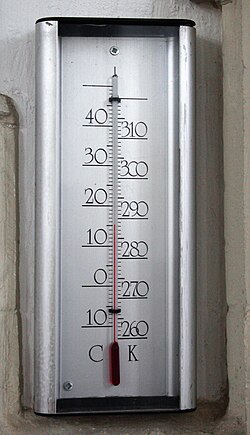
| Temperature | 0 °C, the freezing point of water | above freezing | below freezing |
| Height | sea level | above sea level | below sea level |
| Bank account | an empty account | money in the account | overdrawn (money owed) |
| Business | breaking even | a profit | a loss |
| Golf | level par | over par | under par |
| Lift buttons | the ground floor | floors above | basement levels |
| Football | equal goals for and against | positive goal difference | negative goal difference |

Adding and subtracting integers
- Same signs: add the sizes and keep the sign. 5 + 3 = 8 and (−5) + (−3) = −8.
- Different signs: subtract the smaller size from the larger, and keep the sign of the one with the larger size. (−9) + 4 = −5 and 9 + (−4) = 5.
- Subtracting is the same as adding the opposite. 6 − 10 = 6 + (−10) = −4 and 3 − (−7) = 3 + 7 = 10.
If you are not sure, picture a number line: adding a positive moves you right, adding a negative moves you left.
Multiplying and dividing integers
Look at this pattern. Each answer is 3 less than the one before it, so the pattern carries on below zero:
3 × (−3) = −9
2 × (−3) = −6
1 × (−3) = −3
0 × (−3) = 0
(−1) × (−3) = 3
(−2) × (−3) = 6
Once the first number becomes negative the answers become positive. This gives the sign rules, which work the same way for division:
| Signs | × or ÷ gives | Examples |
|---|---|---|
| positive and positive | positive | 4 × 5 = 20; 20 ÷ 5 = 4 |
| negative and negative | positive | (−4) × (−5) = 20; (−20) ÷ (−5) = 4 |
| positive and negative | negative | 4 × (−5) = −20; 20 ÷ (−5) = −4 |
| negative and positive | negative | (−4) × 5 = −20; (−20) ÷ 5 = −4 |
In short: same signs give a positive answer, different signs give a negative answer. Work out the size of the answer as usual, then fix the sign.
Solving problems with integers
- Read the problem and decide where zero is (sea level, freezing point, an empty account…).
- Write the facts as integers, using negatives for “below”, “owed”, “loss” or “drop”.
- Calculate, using the rules above.
- Answer in words, and check that the answer makes sense (for example −25 dollars means overdrawn by $25).
Worked examples
Example 1: Adding with the same sign
Question: Work out (−8) + (−5).
- Both are negative, so add the sizes: 8 + 5 = 13.
- Keep the negative sign.
Answer: −13.
Example 2: Adding with different signs
Question: Work out 6 + (−11).
- The sizes are 6 and 11. Subtract: 11 − 6 = 5.
- 11 is the larger size and it is negative, so the answer is negative.
Answer: −5.
Example 3: Subtracting a negative
Question: Work out −4 − (−9).
- Subtracting −9 is the same as adding 9: −4 + 9.
- Different signs: 9 − 4 = 5, and 9 is positive.
Answer: 5.
Example 4: Multiplying and dividing
Question: Work out
(a) (−7) × 6
(b) (−7) × (−6)
(c) (−48) ÷ (−8)
(d) 36 ÷ (−4).
- (a) Different signs, so negative: 7 × 6 = 42, giving −42.
- (b) Same signs, so positive: 42.
- (c) Same signs, so positive: 48 ÷ 8 = 6.
- (d) Different signs, so negative: 36 ÷ 4 = 9, giving −9.
Answer:
(a) −42
(b) 42
(c) 6
(d) −9.
Example 5: Temperature rise
Question: At 6 a.m. the temperature on a mountain was −5 °C. At noon it was 9 °C. By how many degrees did the temperature rise?
- Rise = later temperature − earlier temperature = 9 − (−5).
- Subtracting a negative is adding: 9 + 5 = 14.
Answer: The temperature rose by 14 degrees.
Example 6: Below sea level
Question: A submarine is at −120 m (120 m below sea level). It rises 45 m, then dives 30 m. Where is it now?
- Rising is adding and diving is subtracting: −120 + 45 − 30.
- −120 + 45 = −75, then −75 − 30 = −105.
Answer: At −105 m, which is 105 m below sea level.
Example 7: A bank balance
Question: Keisha has $40 in her account. She withdraws $65, then deposits $100. What is her balance after each step?
- After the withdrawal: 40 − 65 = −25, so she is overdrawn by $25.
- After the deposit: −25 + 100 = 75.
Answer: −$25 (overdrawn), then $75.
Example 8: A steady drop
Question: The temperature is 4 °C and it falls by 3 degrees every hour for 5 hours. What is the temperature at the end?
- A fall of 3 degrees each hour is −3, five times: 5 × (−3) = −15.
- New temperature: 4 + (−15) = −11.
Answer: −11 °C.
Common mistakes
- Using the multiplication rule for adding. (−6) + (−4) is −10, not +10. “Two negatives make a positive” is for × and ÷ only.
- Forgetting the sign when you pass zero. 7 − 12 is −5, not 5.
- Getting the sign of a product wrong. (−4) × (−5) is 20, and (−4) × 5 is −20.
- Finding a difference by subtracting the sizes. The difference between 9 °C and −5 °C is 9 − (−5) = 14 degrees, not 4.
- Leaving out the meaning. An answer of −25 in a money problem should be written in words: overdrawn by $25 (or $25 owed).
Practice questions
Try these yourself first, then open each answer to check your working.
1. Work out:
(a) −9 + 4
(b) −3 + (−8)
(c) 7 − 12
(d) −6 − (−10)
(e) 0 − (−5)
(f) −15 + 15.
Show answer
(a) −5
(b) −11
(c) −5
(d) 4
(e) 5
(f) 0.
2. Work out:
(a) (−6) × 4
(b) (−9) × (−3)
(c) 8 × (−7)
(d) (−56) ÷ 7
(e) (−63) ÷ (−9)
(f) 45 ÷ (−5).
Show answer
(a) −24
(b) 27
(c) −56
(d) −8
(e) 7
(f) −9.
3. Work out:
(a) (−2) × (−3) × (−4)
(b) (−20) ÷ 4 + 6
(c) 3 × (−5) − (−8).
Show answer
(a) 6 × (−4) = −24
(b) −5 + 6 = 1
(c) −15 + 8 = −7.
4. Write each of these as an integer:
(a) a fish 15 m below the surface
(b) a profit of $30
(c) 2 floors below the ground floor
(d) 4 strokes under par in golf.
Show answer
(a) −15
(b) 30
(c) −2
(d) −4.
5. A freezer is at −18 °C and the kitchen is at 27 °C. What is the difference in temperature?
Show answer
27 − (−18) = 27 + 18 = 45 degrees.
6. A diver is at −24 m. She rises 9 m, then dives 15 m. Where is she now?
Show answer
−24 + 9 − 15 = −30, so 30 m below sea level.
7. Marcus has $120 in his account. He withdraws $200, then deposits $50. What is his balance now?
Show answer
120 − 200 = −80, then −80 + 50 = −30. He is still overdrawn by $30.
8. The temperature is 2 °C. It falls by 4 degrees each hour for 3 hours. What is the temperature then?
Show answer
2 + 3 × (−4) = 2 − 12 = −10 °C.
9. A golfer’s scores against par for four rounds are −2, −1, +3 and −4.
(a) What is her total score?
(b) What is her mean (average) score per round?
Show answer
(a) −2 + (−1) + 3 + (−4) = −4, so 4 under par.
(b) −4 ÷ 4 = −1, so 1 under par per round.
10. A hiker walks from a valley floor 40 m below sea level to a hilltop 310 m above sea level. How far up did she climb?
Show answer
310 − (−40) = 310 + 40 = 350 m.
Quick check
1. What is (−5) × (−5)?
Show answer
25.
2. What is −3 − 7?
Show answer
−10.
3. Is a negative number divided by a positive number positive or negative?
Show answer
Negative.
Previous: Integers: Natural Numbers, Whole Numbers and Integers, and Ordering Them on the Number Line
Next: Laws of Numbers: Commutative, Associative and Distributive Laws, Closure, Identity and Inverse
Curriculum link: This post is relevant to the Trinidad and Tobago National Lower Secondary (NCSE) Mathematics Curriculum – Form 2, Term 1, Strand 2.1 Number Operations and Number Theory, Topic 2.1.1 Integers – Learning Outcomes 2.1.1.3 (the four basic operations on integers), 2.1.1.4 (integers in everyday life) and 2.1.1.5 (solving simple problems with integers).
Attributions to media used in this post:
Elevation Sea Level Sign Death Valley 2013.jpg – Tuxyso – CC BY-SA 3.0 (via Wikimedia Commons)
Updates
2026/10/23
– First version of this lesson.
2026/10/24
– Next lesson link now points to Lesson 3.
2026/10/25
– Put each lettered part of the questions and answers on its own line.
© 2026 Vedesh Kungebeharry. All rights reserved.