Subtracting 4-Digit Numbers – Standard 3 Maths

What you will learn

  • Subtract numbers with up to four digits using the column method.
  • Regroup (borrow) when the top digit is smaller than the bottom digit.
  • Subtract from numbers with zeros, like 5 000, and solve number stories.

A cricket scoreboard shows how many runs a team still needs. To find that, the scorer subtracts. In this lesson you will subtract numbers up to 9 999 with the column method, one column at a time.

A small wooden cricket scoreboard with white numbers on black boards
A cricket scoreboard. If a team needs 300 runs and has 288, the scorer works out 300 − 288 = 12 more runs. Photo: Acabashi, CC BY-SA 4.0, via Wikimedia Commons.

Top number take away bottom number

Write the bigger number on top and line up the columns. Start with the ones. In each column, take the bottom digit away from the top digit.

Worked example 1

5 786 − 2 341

Show me how

Ones: 6 − 1 = 5. Tens: 8 − 4 = 4.

Hundreds: 7 − 3 = 4. Thousands: 5 − 2 = 3.

The answer is 3 445.

Regrouping

Sometimes the top digit is smaller than the bottom digit. Then you regroup: take 1 from the next column on the left and turn it into 10 in this column. 1 ten becomes 10 ones, 1 hundred becomes 10 tens.

Worked example 2

6 352 − 2 718

Show me how

Ones: you cannot take 8 from 2. Regroup 1 ten: the 5 tens become 4, and 2 ones become 12. 12 − 8 = 4.

Tens: 4 − 1 = 3.

Hundreds: you cannot take 7 from 3. Regroup 1 thousand: 6 becomes 5, and 3 becomes 13. 13 − 7 = 6.

Thousands: 5 − 2 = 3. The answer is 3 634.

Watch out! A common mistake

Do not take the smaller digit from the bigger one just because it is easier. 4 352 − 1 718 is not 3 446. The top number always goes first. Regroup instead: the answer is 2 634.

Zeros and number stories

When the next column is 0, keep going left until you find a digit you can take 1 from.

Worked example 3

5 000 − 1 264

Show me how

You cannot take 4 from 0, and the tens and hundreds are 0 too.

Regroup 1 thousand: 5 becomes 4. The hundreds become 10, then 9 as you pass 1 to the tens. The tens become 10, then 9. The ones become 10.

Ones 10 − 4 = 6, tens 9 − 6 = 3, hundreds 9 − 2 = 7, thousands 4 − 1 = 3. The answer is 3 736.

Words like left, how many more, difference and fewer often tell you to subtract. A ground has 8 500 seats and 6 275 people came: 8 500 − 6 275 = 2 225 empty seats.

Try it

TRY ITColumn subtraction, step by step

Start with the ones. First decide if you can subtract or need to regroup, then tap the digit you write. Regrouped digits show at the top.

Let’s practise

Work out each one in your copybook. Open Hint if you are stuck, then open Show answer to check your working.

1. 7 869 − 3 425

Hint

No regrouping needed.

Show answer

4 444

2. 5 372 − 1 846

Hint

Regroup in the ones and in the hundreds.

Show answer

3 526

3. 8 213 − 4 657

Hint

You regroup three times.

Show answer

3 556

4. 6 000 − 2 485

Hint

Regroup from the thousands, through the zeros.

Show answer

3 515

5. 4 030 − 1 712

Hint

The ones need a ten. The hundreds need a thousand.

Show answer

2 318

6. 9 105 − 678

Hint

Line up the ones: 8 goes under 5.

Show answer

8 427

7. A school raised $5 250 for a trip. The bus costs $3 875. How much money is left?

Hint

Left means subtract.

Show answer

5 250 − 3 875 = 1 375. There is $1 375 left.

8. Kira has 2 340 stickers. Her brother has 1 965. How many more stickers does Kira have?

Hint

How many more means find the difference.

Show answer

2 340 − 1 965 = 375. Kira has 375 more.

Quiz

Lesson quiz: 10 questions

Answer every question, then press Check my answers. Score 8 or more to earn the Regroup Ranger badge.

Recap

  • Write the bigger number on top and line up the columns.
  • Start with the ones and take the bottom digit from the top digit.
  • If the top digit is too small, regroup 1 from the next column into 10.
  • With zeros, keep going left until you find a digit to regroup.
  • Left, how many more and difference often mean subtract.

Words to know

difference
The answer when you subtract.
Example: The difference between 500 and 200 is 300.
regroup
Change 1 ten into 10 ones, or 1 hundred into 10 tens.
Example: I regrouped 1 ten to make 12 ones.
borrow
Another word some people use for regroup.
Example: You borrow from the tens column.
minus
The − sign. It means take away.
Example: 9 minus 4 is 5.
left
What remains after some is taken away.
Example: I had $50, spent $30 and have $20 left.

Try it at home

  • Ask an adult how much something costs and how much money they paid with. Work out the change with the column method.
  • Mini project: find the year you were born and this year. Subtract to find your age. Do the same for two people at home.

Test tips

Tips for class tests

  • Always put the first number in the question on top.
  • Cross out and write the regrouped digit neatly above the column.
  • Check by adding your answer to the bottom number. You should get the top number. Lesson 9 shows you how.

For parents and teachers

After this lesson, your child should be able to:

  • subtract numbers with up to four digits using the column method;
  • regroup, including across zeros such as 5 000 − 1 264;
  • solve and write subtraction stories about money and everyday things.

Many children find zeros hardest. Use the “Numbers with zeros” mode, or model 5 000 as 5 bundles of a thousand that must be opened up. Money in this lesson is in whole dollars, as the guide asks.

Quiz scores and badges are saved only in this browser on this device. Nothing is sent anywhere. If the browser data is cleared, or another device is used, the badges will be lost.

Previous: Adding 4-Digit Numbers – Standard 3 Maths
Next: Checking Answers: Estimation and the Inverse – Standard 3 Maths
Course: Standard 3 Maths

Updates

2026/11/26
– Answers are now read aloud when you tap them.

2026/11/17
– Made read aloud work on more phones.

2026/11/04
– First version of this lesson.

Attributions to media used in this post:

Cricket scoreboard box at Epping Cricket Club, Essex, England 01.jpg – Acabashi – CC BY-SA 4.0 (via Wikimedia Commons)

© 2026 Vedesh Kungebeharry. All rights reserved.

Adding 4-Digit Numbers – Standard 3 Maths

What you will learn

  • Add numbers with up to four digits using the column method.
  • Carry when a column adds up to 10 or more.
  • Add three or four numbers and solve number stories.

Adding big numbers in your head is hard, but the column method makes it easy. You add one column at a time, starting with the ones. In this lesson you will add numbers up to 9 999, the way you will do it in class tests.

A small wooden abacus with rows of coloured beads on wires
An abacus is an old counting frame. When a row of ten beads is full, you move one bead on the next row instead. That is carrying. Photo: Deinodactyla, CC0, via Wikimedia Commons.

Line up the columns

Write the numbers one under the other so the ones, tens, hundreds and thousands are in straight columns. Start adding on the right, with the ones.

Worked example 1

3 214 + 4 352

Show me how

Ones: 4 + 2 = 6. Tens: 1 + 5 = 6.

Hundreds: 2 + 3 = 5. Thousands: 3 + 4 = 7.

The answer is 7 566. No column made 10 or more, so there was nothing to carry.

Carrying

When a column adds up to 10 or more, you cannot fit it in one place. Write the ones digit and carry the ten to the next column. Ten ones make 1 ten, ten tens make 1 hundred, and ten hundreds make 1 thousand.

Worked example 2

3 456 + 2 189

Show me how

Ones: 6 + 9 = 15. Write 5, carry 1 ten.

Tens: 5 + 8 + 1 = 14. Write 4, carry 1 hundred.

Hundreds: 4 + 1 + 1 = 6. Write 6. Thousands: 3 + 2 = 5.

The answer is 5 645.

Watch out! A common mistake

Do not forget the number you carried. Write it small at the top of the next column, then add it in. Also keep the columns straight: in 2 507 + 86, the 6 goes under the 7, not under the 2.

Three or more numbers and number stories

You can add three or four numbers in the same way. Add every digit in the column, plus anything you carried. Sometimes you carry 2.

Worked example 3

A shop sold 1 275 doubles on Friday, 2 348 on Saturday and 896 on Sunday. How many in all?

Show me how

Write 1 275 + 2 348 + 896 in columns. Ones: 5 + 8 + 6 = 19. Write 9, carry 1.

Tens: 7 + 4 + 9 + 1 = 21. Write 1, carry 2.

Hundreds: 2 + 3 + 8 + 2 = 15. Write 5, carry 1. Thousands: 1 + 2 + 1 = 4.

The shop sold 4 519 doubles.

Words like altogether, in all, total and more often tell you to add. Always write your answer in a sentence.

Try it

TRY ITColumn addition, step by step

Work one column at a time, starting with the ones. Tap the digit you write in the yellow column. Carried digits appear at the top.

Let’s practise

Work out each one in your copybook. Open Hint if you are stuck, then open Show answer to check your working.

1. 2 415 + 3 263

Hint

No carrying needed.

Show answer

5 678

2. 4 527 + 2 345

Hint

Ones: 7 + 5 = 12.

Show answer

6 872 (carry 1 ten)

3. 1 768 + 3 456

Hint

You carry three times.

Show answer

5 224

4. 3 090 + 2 815

Hint

Watch the zeros.

Show answer

5 905

5. 6 342 + 875

Hint

Line up the ones: the 5 goes under the 2.

Show answer

7 217

6. 1 205 + 2 130 + 3 452

Hint

Add three digits in each column.

Show answer

6 787

7. Mr Ali drove 2 486 km in March and 3 158 km in April. How far did he drive in the two months?

Hint

Add the two distances.

Show answer

2 486 + 3 158 = 5 644. He drove 5 644 km.

8. Write your own number story for 1 500 + 2 750, then solve it.

Hint

Use a word like altogether or total.

Show answer

Many stories are possible. The answer is 4 250.

Quiz

Lesson quiz: 10 questions

Answer every question, then press Check my answers. Score 8 or more to earn the Column Adder badge.

Recap

  • Line up ones, tens, hundreds and thousands in columns.
  • Start adding with the ones on the right.
  • If a column makes 10 or more, write the ones digit and carry to the next column.
  • Add three or four numbers the same way.
  • In number stories, words like altogether and total mean add. Answer in a sentence.

Words to know

sum
The answer when you add.
Example: The sum of 2 000 and 500 is 2 500.
column
A line of digits going down, all with the same place value.
Example: The 6 and 9 are in the ones column.
carry
Move a ten to the next column on the left.
Example: 6 + 9 = 15, so write 5 and carry 1.
total
The amount you get when everything is added.
Example: The total number of pupils is 1 240.
altogether
Everything put together.
Example: We sold 300 tickets altogether.

Try it at home

  • Look at a shopping bill or a newspaper. Find two big numbers and add them with the column method. Check with a calculator if an adult has one.
  • Mini project: write three number stories that need adding, one about your school, one about a sport and one about food. Solve each one and ask someone at home to check.

Test tips

Tips for class tests

  • Write the numbers neatly in columns. Use squared paper if you can.
  • Write the carried digit small at the top of the next column so you do not forget it.
  • If the question is a story, underline the numbers and the word that tells you to add.

For parents and teachers

After this lesson, your child should be able to:

  • add numbers with up to four digits, with totals below 10 000, using the column method;
  • carry correctly from the ones, tens and hundreds;
  • add three or four numbers and solve and write number stories.

If your child makes mistakes, use bundles of straws or the place-value builder from Lesson 2 to show why ten ones become one ten. Checking answers is covered in Lesson 9.

Quiz scores and badges are saved only in this browser on this device. Nothing is sent anywhere. If the browser data is cleared, or another device is used, the badges will be lost.

Previous: Number Sentences with a Missing Number – Standard 3 Maths
Next: Subtracting 4-Digit Numbers – Standard 3 Maths
Course: Standard 3 Maths

Updates

2026/11/26
– Answers are now read aloud when you tap them.

2026/11/17
– Made read aloud work on more phones.

2026/11/04
– First version of this lesson.

Attributions to media used in this post:

20th Century Small Wooden Abacus.jpg – Deinodactyla – CC0 1.0 (via Wikimedia Commons)

© 2026 Vedesh Kungebeharry. All rights reserved.

Number Sentences with a Missing Number – Standard 3 Maths

What you will learn

  • Explain what the equals sign means.
  • Find a missing number using the inverse (opposite) operation.
  • Solve number sentences when the box is on the left or the right of the equals sign.

Some number sentences have a number missing, shown by a box. Finding it is like being a detective: the other numbers are your clues. In this lesson you will learn a trick that works every time: use the opposite operation.

A balance scale with two flat metal pans, level with each other
A balance is level when both sides weigh the same. A number sentence works the same way: both sides of the equals sign have the same value. Photo: Lilly_M, CC BY-SA 3.0, via Wikimedia Commons.

What the equals sign means

A number sentence uses numbers and signs, like 300 + 200 = 500. The equals sign (=) does not mean “the answer comes next”. It means both sides have the same value, like a balance that is level.

So 500 = 300 + 200 and 300 + 200 = 400 + 100 are true number sentences too. When a number is missing, we draw a box: + 200 = 500.

Use the inverse

Adding and subtracting are inverse (opposite) operations. One undoes the other. To find a missing number, do the opposite.

Worked example 1

+ 1 250 = 3 400

Show me how

Something add 1 250 makes 3 400. To undo adding, subtract.

3 400 − 1 250 = 2 150.

Check: 2 150 + 1 250 = 3 400. So = 2 150.

Worked example 2

5 000 − = 1 800

Show me how

5 000 take away something leaves 1 800.

The missing number is the difference: 5 000 − 1 800 = 3 200.

Check: 5 000 − 3 200 = 1 800. So the box is 3 200.

The box can be anywhere

The box can be on the right of the equals sign: 900 = 400 + . It still means the same: 400 and what make 900? The answer is 500.

Sometimes both sides have two numbers: 400 + 300 = + 200. Work out the side you know first: 400 + 300 = 700. Now 700 = + 200, so the box is 500.

Watch out! A common mistake

Do not just add the numbers you can see. In 25 + = 60, the answer is not 85. Ask: 25 and what make 60? 60 − 25 = 35. Always put your answer in the box and check that both sides are equal.

Multiplying and dividing

Multiplying and dividing are inverse operations too. For 7 × = 42, think 42 ÷ 7 = 6. For 42 ÷ = 7, think 7 × 6 = 42, so the box is 6.

Try it

TRY ITBalance the number sentence

Choose a game, then tap the number that goes in the box. If you choose a wrong number, watch the balance tip.

Let’s practise

Work out each one in your copybook. Open Hint if you are stuck, then open Show answer to check your working.

1. + 45 = 120

Hint

What do you add to 45 to make 120?

Show answer

120 − 45 = 75. The box is 75.

2. 2 300 + = 5 000

Hint

Subtract 2 300 from 5 000.

Show answer

5 000 − 2 300 = 2 700.

3. − 350 = 1 650

Hint

Use the inverse: add.

Show answer

1 650 + 350 = 2 000. Check: 2 000 − 350 = 1 650.

4. 6 000 − = 2 500

Hint

How much is taken away?

Show answer

6 000 − 2 500 = 3 500.

5. 800 = 500 +

Hint

The box is on the right. 500 and what make 800?

Show answer

300

6. 350 + 150 = + 100

Hint

Work out the left side first.

Show answer

350 + 150 = 500, and 500 − 100 = 400. The box is 400.

7. (a) 8 × = 56
(b) 63 ÷ = 9

Hint

Use your times tables.

Show answer

(a) 56 ÷ 8 = 7
(b) 9 × 7 = 63, so the box is 7.

8. Ria had some marbles. She won 125 more and now has 400. Write a number sentence with a box, then solve it.

Hint

What did she start with? That is the box.

Show answer

+ 125 = 400. 400 − 125 = 275, so Ria had 275 marbles.

Quiz

Lesson quiz: 10 questions

Answer every question, then press Check my answers. Score 8 or more to earn the Balance Keeper badge.

Recap

  • The equals sign means both sides have the same value.
  • A box stands for a missing number.
  • Use the inverse to find it: subtraction undoes addition, and division undoes multiplication.
  • The box can be on the left or the right of the equals sign.
  • Check by putting your answer in the box: both sides must be equal.

Words to know

number sentence
Numbers and signs that make a statement.
Example: 400 + 100 = 500 is a number sentence.
equals sign
The sign = which means both sides have the same value.
Example: In 6 = 2 + 4 the equals sign is first.
missing number
A number that is not shown, often drawn as a box.
Example: In + 3 = 10 the missing number is 7.
inverse
The opposite operation, which undoes another one.
Example: Subtraction is the inverse of addition.
balance
When both sides are equal.
Example: 300 + 200 and 500 balance.

Try it at home

  • Make a balance with a coat hanger, string and two plastic cups. Put the same number of beans or bottle caps on each side. Take some away from one side and ask someone at home to make it balance again.
  • Mini project: write five missing-number puzzles on cards, with the box in different places. Swap cards with someone at home and check each other’s answers.

Test tips

Tips for class tests

  • Look at the sign first. If it is +, the missing number is usually found by subtracting.
  • Put your answer in the box and work out both sides. They must be equal.
  • If both sides have two numbers, work out the side you know first.

For parents and teachers

After this lesson, your child should be able to:

  • explain that the equals sign means “the same value as”;
  • find a missing number by using the inverse operation;
  • solve number sentences with the box on either side of the equals sign.

Multiplying and dividing here use only facts up to 10 × 10; these are practised fully in the multiplication lessons. Ask your child to check each answer by putting it back in the box.

Quiz scores and badges are saved only in this browser on this device. Nothing is sent anywhere. If the browser data is cleared, or another device is used, the badges will be lost.

Previous: Number Patterns and Rules – Standard 3 Maths
Next: Adding 4-Digit Numbers – Standard 3 Maths
Course: Standard 3 Maths

Updates

2026/11/26
– Answers are now read aloud when you tap them.

2026/11/17
– Made read aloud work on more phones.

2026/11/04
– First version of this lesson.

Attributions to media used in this post:

Simple balance scales-02.jpg – Lilly_M – CC BY-SA 3.0 (via Wikimedia Commons)

© 2026 Vedesh Kungebeharry. All rights reserved.

Number Patterns and Rules – Standard 3 Maths

What you will learn

  • Describe a number pattern and say its rule.
  • Continue a pattern, find missing numbers and spot mistakes.
  • Make your own number pattern and explain its rule.

Patterns are everywhere: in hopscotch squares, in the steelpan, and in numbers too. A number pattern is a list of numbers that follows a rule. If you know the rule, you can work out any number in the pattern. In this lesson you will become a pattern detective.

Hopscotch squares numbered 1 to 10, painted red on a paved path
Hopscotch squares are numbered 1, 2, 3, 4 and so on. That is a pattern with the rule “add 1”. Photo: Trougnouf (Benoit Brummer), CC BY 4.0, via Wikimedia Commons.

What is the rule?

Look at this pattern:

1, 6, 11, 16, 21

To find the rule, look at how you get from one number to the next. 1 to 6 is 5 more. 6 to 11 is 5 more. The rule is start at 1 and add 5. The next number is 26.

Patterns can go down too: 9 000, 8 500, 8 000, 7 500. The rule is start at 9 000 and subtract 500.

Always check the rule works for every step, not just the first one.

Patterns with times tables

Counting in sixes, 6, 12, 18, 24, 30, is a pattern from the 6 times table. The rule is add 6.

Some patterns multiply. In 2, 4, 8, 16, 32 each number is double the one before. The rule is multiply by 2. In 3 200, 1 600, 800, 400 each number is half the one before. The rule is divide by 2.

Worked example

Find the rule and the next number: 5, 10, 20, 40, ___

Show me how

5 to 10 is add 5. But 10 to 20 is add 10, so adding the same number does not work.

Try multiplying: 5 × 2 = 10, 10 × 2 = 20, 20 × 2 = 40. It works every time.

The rule is multiply by 2. The next number is 40 × 2 = 80.

Missing numbers and mistakes

To find a missing number, first find the rule using numbers that are next to each other.

Worked example

Find the missing number: 250, 500, ___, 1 000, 1 250

Show me how

500 − 250 = 250, and 1 250 − 1 000 = 250.

The rule is add 250.

500 + 250 = 750. The missing number is 750.

Sometimes a pattern has a mistake. In 7, 14, 21, 27, 35 the rule is add 7, but 21 + 7 is 28, not 27. The 27 is the mistake.

Watch out! A common mistake

Do not find the rule from only the first two numbers. In 2, 4, 8, 16 the first step is add 2, but the next step is add 4. Check every step before you decide on the rule.

Make your own pattern

To make a pattern, choose a start number and a rule. For example: start at 100 and add 25. The pattern is 100, 125, 150, 175, 200.

When you share your pattern, always say the rule so someone else can check it.

Try it

TRY ITPattern detective

Choose a game and tap the right answer.

TRY ITPattern maker

Choose a start number and a rule. The pattern maker shows the first six numbers of your pattern.

Let’s practise

Work out each one in your copybook. Open Hint if you are stuck, then open Show answer to check your working.

1. Write the next two numbers: 3, 7, 11, 15, ___, ___

Hint

What is added each time?

Show answer

The rule is add 4: 19, 23.

2. Write the next two numbers: 5 000, 4 900, 4 800, ___, ___

Hint

Is it going up or down?

Show answer

The rule is subtract 100: 4 700, 4 600.

3. What is the rule? 4, 8, 16, 32, 64

Hint

Adding the same number does not work. Try multiplying.

Show answer

Start at 4 and multiply by 2.

4. Find the missing number: 1 500, 2 000, ___, 3 000

Hint

Find the jump first.

Show answer

The rule is add 500. The missing number is 2 500.

5. Find the mistake: 9, 18, 27, 35, 45, 54

Hint

Count in nines.

Show answer

35 is wrong. It should be 36.

6. Write the first five numbers of the pattern: start at 10 and add 9.

Hint

Add 9 each time.

Show answer

10, 19, 28, 37, 46

7. (a) 6 400, 3 200, 1 600, ___
(b) 8, 16, 24, ___
(c) 120, 110, 100, ___

Hint

Find each rule first.

Show answer

(a) Divide by 2: 800
(b) Add 8: 32
(c) Subtract 10: 90

8. Make your own pattern with five numbers. Write its rule.

Hint

Choose a start number and a rule.

Show answer

Many answers are possible, for example start at 50 and add 50: 50, 100, 150, 200, 250.

Quiz

Lesson quiz: 10 questions

Answer every question, then press Check my answers. Score 8 or more to earn the Pattern Finder badge.

Recap

  • A number pattern follows a rule, such as add 5, subtract 100 or multiply by 2.
  • To find the rule, look at how you get from each number to the next.
  • Check the rule works for every step.
  • Use the rule to find missing numbers and to spot mistakes.
  • To make a pattern, choose a start number and a rule, and always say the rule.

Words to know

pattern
Numbers or shapes that follow a rule.
Example: 2, 4, 6, 8 is a pattern.
rule
What you do to get from one number to the next.
Example: The rule for 2, 4, 6, 8 is add 2.
term
One of the numbers in a pattern.
Example: In 5, 10, 15, the third term is 15.
double
To multiply by 2.
Example: Double 40 is 80.
halve
To divide by 2, or split into two equal parts.
Example: Half of 800 is 400.

Try it at home

  • Look for number patterns at home and outside: house numbers on one side of a street, page numbers, or a calendar. Write down the rule for each one.
  • Mini project: make a pattern poster. Choose three different rules, write the first six numbers of each pattern, and ask someone at home to work out your rules.

Test tips

Tips for class tests

  • Write the jump between each pair of numbers above the pattern before you answer.
  • If adding or subtracting does not work, try multiplying or dividing.
  • Check your answer by using the rule on the number before it.

For parents and teachers

After this lesson, your child should be able to:

  • describe and continue number patterns that add, subtract, multiply or divide;
  • find missing numbers and mistakes in a pattern;
  • make a pattern and state its rule.

Ask your child to say the rule in words (“start at 7 and add 7”). Patterns with fractions are covered later, in the fractions lessons.

Quiz scores and badges are saved only in this browser on this device. Nothing is sent anywhere. If the browser data is cleared, or another device is used, the badges will be lost.

Previous: Rounding and Estimating – Standard 3 Maths
Next: Number Sentences with a Missing Number – Standard 3 Maths
Course: Standard 3 Maths

Updates

2026/11/26
– Answers are now read aloud when you tap them.

2026/11/17
– Made read aloud work on more phones.

2026/11/04
– Added the link to the next lesson.

2026/11/03
– First version of this lesson.

Attributions to media used in this post:

Marelle (DSC 3214).jpg – Trougnouf (Benoit Brummer) – CC BY 4.0 (via Wikimedia Commons)

© 2026 Vedesh Kungebeharry. All rights reserved.

Rounding and Estimating – Standard 3 Maths

What you will learn

  • Round numbers to the nearest 10, 100 and 1 000.
  • Use a number line to see which ten, hundred or thousand a number is nearest to.
  • Estimate how many things there are, using a group of 100 as a guide, then count to check.

Sometimes we do not need an exact number. “About 3 000 people came to the show” is easier to say and to remember than “2 963 people came”. A number that is close but easier to use is called a rounded number. In this lesson you will learn how to round and how to make a good estimate.

The Hasely Crawford Stadium in Port of Spain, with rows of blue seats, a covered stand and white tents on the track
The Hasely Crawford Stadium in Port of Spain has thousands of seats. How could you estimate how many there are without counting every one? Photo: Paul Lowry, CC BY 2.0, via Wikimedia Commons.

Rounding to the nearest 10

The number 2 463 is between 2 460 and 2 470. Picture a number line from 2 460 to 2 470. The middle is 2 465.

2 463 is before the middle, so it is nearer to 2 460. We say 2 463 rounded to the nearest ten is 2 460.

What about 2 465, exactly in the middle? The rule is: halfway rounds up. So 2 465 rounds to 2 470.

A quick way: look at the ones digit. If it is 0, 1, 2, 3 or 4, round down. If it is 5, 6, 7, 8 or 9, round up.

Rounding to the nearest 100 and 1 000

To round to the nearest hundred, look at the tens digit. To round to the nearest thousand, look at the hundreds digit. Use the same rule: 5 or more rounds up.

Worked example

Round 5 739 to (a) the nearest 100 (b) the nearest 1 000.

Show me how

(a) 5 739 is between 5 700 and 5 800. The tens digit is 3, which is less than 5. So round down: 5 700.

(b) 5 739 is between 5 000 and 6 000. The hundreds digit is 7, which is 5 or more. So round up: 6 000.

Watch out! A common mistake

When you round, the digits after the place you round to all become zeros. 4 382 rounded to the nearest hundred is 4 400, not 4 482 or 4 480. And remember: 2 650 rounds to 2 700, because halfway rounds up.

Estimating with 100 as a guide

An estimate is a good guess that uses what you know. One useful thing to know is what 100 things look like.

Imagine a jar of red beans. You count 100 beans into a cup. The jar holds about 4 cups. So there are about 400 beans in the jar. This is called mental grouping: in your head, you split the big amount into groups of 100.

After you estimate, you can count to check. If you count 386 beans, your estimate of 400 was very good!

Worked example

A page of a book has about 100 words. A story has 9 pages. About how many words is the story?

Show me how

Each page is about 100 words.

9 groups of 100 is 900.

Answer: about 900 words.

Try it

TRY ITNumber-line rounder

Look at where the number sits on the line. The red mark shows the middle. Tap the end that the number is nearer to.

TRY ITEstimate the dots

The small box has exactly 100 dots. The dots in the long box are packed the same way. Use the small box to estimate how many there are. Then the game counts them to check.

Let’s practise

Work out each one in your copybook. Open Hint if you are stuck, then open Show answer to check your working.

1. Round 3 476 to the nearest 10.

Hint

Look at the ones digit.

Show answer

3 476 is between 3 470 and 3 480. The ones digit is 6, so round up: 3 480.

2. Round 3 476 to the nearest 100.

Hint

Look at the tens digit.

Show answer

The tens digit is 7, so round up: 3 500.

3. Round 3 476 to the nearest 1 000.

Hint

Look at the hundreds digit.

Show answer

The hundreds digit is 4, so round down: 3 000.

4. Round 6 250 to the nearest 100.

Hint

It is exactly halfway between 6 200 and 6 300.

Show answer

Halfway rounds up: 6 300.

5. (a) Round 8 049 to the nearest 10.
(b) Round 8 049 to the nearest 100.
(c) Round 8 049 to the nearest 1 000.

Hint

Each time, look at the digit to the right of the place.

Show answer

(a) 8 050
(b) 8 000
(c) 8 000

6. Which numbers round to 700 when rounded to the nearest 100: 649, 651, 748, 750?

Hint

Which numbers are between 650 and 749?

Show answer

651 and 748. 649 rounds to 600 and 750 rounds to 800.

7. A bag holds about 100 marbles. Aaliyah has 6 full bags. About how many marbles does she have?

Hint

Count the groups of 100.

Show answer

About 600 marbles.

8. At a match, one stand holds about 1 000 people. There are 7 stands, all full. Estimate the crowd.

Hint

7 groups of 1 000.

Show answer

About 7 000 people.

Quiz

Lesson quiz: 10 questions

Answer every question, then press Check my answers. Score 8 or more to earn the Rounding Ranger badge.

Recap

  • To round, find the two tens, hundreds or thousands the number is between, and choose the nearer one.
  • Look at the digit to the right of the place you are rounding to. 0 to 4 rounds down. 5 to 9 rounds up.
  • Halfway always rounds up.
  • When you round, the digits after that place become zeros.
  • Knowing what 100 things look like helps you estimate bigger amounts. Count to check your estimate.

Words to know

round
To change a number to a nearby ten, hundred or thousand that is easier to use.
Example: 2 463 rounded to the nearest ten is 2 460.
nearest
The closest.
Example: 5 739 to the nearest thousand is 6 000.
estimate
A careful guess that is close to the real amount.
Example: My estimate was about 400 beans.
benchmark
A number you know well that you use to help you estimate.
Example: We used 100 as a benchmark to estimate the beans.
halfway
Exactly in the middle.
Example: 2 465 is halfway between 2 460 and 2 470.

Try it at home

  • Count out 100 grains of rice, dried peas or beans. Look closely at how much space they take. Then estimate a bigger amount using your 100 as a guide, and count to check.
  • Mini project: look at the prices on a shop receipt or in a flyer. Round each price to the nearest 10 dollars and add up the rounded prices to estimate the total.

Test tips

Tips for class tests

  • Underline the digit you need to look at before you round.
  • Check your answer has zeros after the place you rounded to.
  • For estimates, the question often says “about”. You do not need an exact answer.

For parents and teachers

After this lesson, your child should be able to:

  • round numbers to the nearest 10, 100 and 1 000;
  • explain rounding using a number line;
  • estimate quantities using 100 as a benchmark, and check by counting.

Children often forget that halfway (for example 6 250 to the nearest 100) rounds up, or they change only one digit. Using a drawn number line helps. Everyday estimating (people in a queue, beans in a jar) builds good number sense.

Quiz scores and badges are saved only in this browser on this device. Nothing is sent anywhere. If the browser data is cleared, or another device is used, the badges will be lost.

Previous: Compare and Order Numbers – Standard 3 Maths
Next: Number Patterns and Rules – Standard 3 Maths
Course: Standard 3 Maths

Updates

2026/11/26
– Answers are now read aloud when you tap them.

2026/11/17
– Made read aloud work on more phones.

2026/11/03
– First version of this lesson.

Attributions to media used in this post:

Hasely Crawford Stadium, Trinidad.jpg – Paul Lowry from New York – CC BY 2.0 (via Wikimedia Commons)

© 2026 Vedesh Kungebeharry. All rights reserved.

Compare and Order Numbers – Standard 3 Maths

What you will learn

  • Compare numbers up to 10 000 using place value.
  • Use the signs (is greater than) and (is less than).
  • Put numbers in order, and make the largest and smallest numbers from four digits.

Which is higher: El Tucuche or El Cerro del Aripo? Which school has more pupils? To answer questions like these, you need to compare numbers. In this lesson you will learn a sure way to compare any two numbers up to 10 000.

The forested peak of El Tucuche in the Northern Range of Trinidad, with clouds above
El Tucuche is 936 metres high. El Cerro del Aripo is 940 metres high. Which is higher? Photo: bndawn, CC BY-SA 3.0, via Wikimedia Commons.

Comparing with place value

First, count the digits. A number with more digits is greater. 1 001 has four digits and 999 has three, so 1 001 is greater.

If the numbers have the same number of digits, compare the digits from the left, one place at a time, until you find two that are different.

ThHTO
4382
4328

Thousands: 4 and 4 are the same. Hundreds: 3 and 3 are the same. Tens: 8 is more than 2. So 4 382 is greater than 4 328.

Worked example

Which is higher: El Tucuche (936 metres) or El Cerro del Aripo (940 metres)?

Show me how

Both numbers have three digits.

Hundreds: 9 and 9 are the same.

Tens: 3 and 4. 4 is more than 3.

So 940 is greater than 936. El Cerro del Aripo is higher, by 4 metres.

The greater than and less than signs

We use signs to compare numbers. means is greater than. means is less than. = means is equal to.

5 607 5 076

2 199 2 910

A good trick: the open side of the sign always faces the greater number. The point faces the smaller number.

Watch out! A common mistake

Do not look only at the first digit you see. 989 1 200, even though 9 is more than 1. The number 1 200 has more digits, so it is greater.

Putting numbers in order

Ascending order means from smallest to greatest. Descending order means from greatest to smallest.

Worked example

Put these numbers in ascending order: 3 450, 3 045, 3 504, 3 405

Show me how

All the thousands digits are 3.

Compare the hundreds: 4, 0, 5, 4. The smallest is 3 045 and the greatest is 3 504.

For 3 450 and 3 405, compare the tens: 0 is less than 5, so 3 405 comes first.

Answer: 3 045, 3 405, 3 450, 3 504.

Largest and smallest from four digits

With the digit cards 5, 0, 8 and 3 you can make many numbers. To make the largest, put the biggest digit in the thousands place, then the next biggest, and so on: 8 530.

To make the smallest, start with the smallest digit, but a four-digit number cannot start with 0. So start with 3, then put the 0: 3 058.

Watch out! A common mistake

0 358 is not a four-digit number. It is just 358. Never put 0 in the thousands place.

Try it

TRY ITCompare it

Choose a game and tap the right answer.

TRY ITPut them in order

Tap the numbers in the right order. Each one you get right moves into the answer line.

Let’s practise

Work out each one in your copybook. Open Hint if you are stuck, then open Show answer to check your working.

1. Write , or = in the box: 6 214 ☐ 6 241

Hint

Compare the tens.

Show answer

6 214 6 241, because 1 ten is less than 4 tens.

2. Write , or = in the box: 8 090 ☐ 809

Hint

Count the digits.

Show answer

8 090 809, because 8 090 has four digits.

3. Which is greater, 7 538 or 7 583? How do you know?

Hint

The thousands and hundreds are the same.

Show answer

7 583. The tens digit 8 is more than 3.

4. Put in ascending order: 2 760, 2 076, 2 706, 2 670

Hint

Compare the hundreds digits first.

Show answer

2 076, 2 670, 2 706, 2 760

5. Put in descending order: 9 001, 9 100, 9 010, 9 110

Hint

Descending means greatest first.

Show answer

9 110, 9 100, 9 010, 9 001

6. Use the digits 4, 9, 1 and 6 once each. Make (a) the largest number (b) the smallest number.

Hint

Largest: biggest digit first. Smallest: smallest digit first.

Show answer

(a) 9 641
(b) 1 469

7. Use the digits 7, 0, 2 and 5 once each. Make the smallest four-digit number.

Hint

The number cannot start with 0.

Show answer

2 057

8. Priya’s school has 1 245 pupils. Marcus’s school has 1 254 pupils. Whose school has more pupils?

Hint

Compare the tens.

Show answer

Marcus’s school. 1 254 1 245.

Quiz

Lesson quiz: 10 questions

Answer every question, then press Check my answers. Score 8 or more to earn the Number Judge badge.

Recap

  • A number with more digits is greater.
  • If two numbers have the same number of digits, compare from the left until the digits are different.
  • means is greater than and means is less than. The open side faces the greater number.
  • Ascending order is smallest to greatest. Descending order is greatest to smallest.
  • To make the largest number, put the digits from biggest to smallest. A four-digit number cannot start with 0.

Words to know

greater than
More than. Its sign is .
Example: 5 000 4 999 means 5 000 is greater than 4 999.
less than
Fewer or smaller than. Its sign is .
Example: 2 199 2 910 means 2 199 is less than 2 910.
ascending order
Arranged from smallest to greatest.
Example: 1 008, 1 080, 1 800 is in ascending order.
descending order
Arranged from greatest to smallest.
Example: 9 110, 9 100, 9 010 is in descending order.
compare
To look at two things to see which is greater or smaller.
Example: We compared the heights of two mountains.

Try it at home

  • Look at the prices of three items in a shop flyer or on receipts. Put the prices in order from cheapest to dearest.
  • Mini project: find out how many pupils are in three schools near you (ask an adult or a teacher). Write the numbers in descending order and use signs between them.

Test tips

Tips for class tests

  • Line the numbers up by place value, one under the other, before comparing.
  • After writing a sign, read the whole sentence aloud, for example “4 805 is less than 4 850”, to check it makes sense.
  • Read the question carefully: ascending and descending are opposites.

For parents and teachers

After this lesson, your child should be able to:

  • compare numbers up to 10 000 using place value;
  • use the greater than and less than signs correctly;
  • order numbers in ascending and descending order, and make the largest and smallest numbers from four digits.

A common error is comparing only the first digits, or forgetting that 10 000 has five digits. Ask your child to explain which place decided the answer.

Quiz scores and badges are saved only in this browser on this device. Nothing is sent anywhere. If the browser data is cleared, or another device is used, the badges will be lost.

Previous: Place Value and Expanded Notation – Standard 3 Maths
Next: Rounding and Estimating – Standard 3 Maths
Course: Standard 3 Maths

Updates

2026/11/26
– Answers are now read aloud when you tap them.

2026/11/17
– Made read aloud work on more phones.

2026/11/03
– First version of this lesson.

Attributions to media used in this post:

El Tucuche 45.jpg – bndawn – CC BY-SA 3.0 (via Wikimedia Commons)

© 2026 Vedesh Kungebeharry. All rights reserved.

Place Value and Expanded Notation – Standard 3 Maths

What you will learn

  • Say the value of each digit in a number up to 9 999.
  • Write a number in expanded notation, and change expanded notation back into a numeral.
  • Describe the same number in different ways, such as 624 tens and 5 ones.

Every digit in a number has a job. In 7 777 all four digits are 7, but each 7 is worth a different amount. In this lesson you will find out why. You will learn to break numbers into parts and put them back together.

Wooden base ten blocks: a large thousand cube, a hundred flat, a ten rod and some single ones
Base ten blocks: a thousand cube, a hundred flat, a ten rod and some ones. Photo: Rhetos, CC0, via Wikimedia Commons.

Place and value

The place of a digit is where it sits in the number. The value of a digit is how much it is worth in that place.

ThousandsHundredsTensOnes
7777
7 000700707

In 7 777 the first 7 is worth 7 000. The next is worth 700, then 70, then 7. Each place is worth ten times the place to its right.

Worked example

What is the value of the digit 4 in 2 456?

Show me how

Find the place of the 4. Count from the right: ones, tens, hundreds.

The 4 is in the hundreds place.

4 hundreds = 400.

Answer: the value of the 4 is 400.

Expanded notation

Expanded notation shows a number as the sum of the values of its digits.

4 352 = 4 000 + 300 + 50 + 2

When a digit is zero, it is worth nothing, so we can leave it out: 5 060 = 5 000 + 60.

To go back to a numeral, put each part in its place. The parts can be in any order: 7 + 2 000 + 400 = 2 407.

Worked example

Write 3 000 + 40 + 5 as a numeral.

Show me how

3 000 means 3 thousands.

There is no hundreds part, so the hundreds digit is 0.

40 means 4 tens and 5 means 5 ones.

Answer: 3 045.

Watch out! A common mistake

Do not just join the digits together. 3 000 + 40 + 5 is not 345. Check each place: thousands 3, hundreds 0, tens 4, ones 5. The answer is 3 045.

One number, many ways

You can describe a number in more than one way. Look at 6 245:

6 thousands, 2 hundreds, 4 tens and 5 ones
62 hundreds and 45 ones
624 tens and 5 ones
6 245 ones

They all mean the same number! 62 hundreds is 6 thousands and 2 hundreds put together. 624 tens is all the tens in 6 245.

Wooden base ten blocks stacked to show 328: three hundred flats, two ten rods and eight ones, with 328 written below
These blocks show 328: 3 hundreds, 2 tens and 8 ones. You could also say 32 tens and 8 ones. Photo: Rhetos, CC0, via Wikimedia Commons.

Worked example

How many tens are in 3 580?

Show me how

Cover the ones digit: 358 | 0.

The digits left over tell you the number of tens.

Answer: 358 tens. 358 tens = 3 580.

Try it

TRY ITPlace-value builder

Press + and − to change each column. The builder shows the expanded notation of your number.

TRY ITDigit detective

Choose a game and tap the right answer.

Let’s practise

Work out each one in your copybook. Open Hint if you are stuck, then open Show answer to check your working.

1. What is the value of the digit 8 in 3 841?

Hint

Which place is the 8 in?

Show answer

The 8 is in the hundreds place, so its value is 800.

2. Write 9 263 in expanded notation.

Hint

Write the value of each digit with + between.

Show answer

9 000 + 200 + 60 + 3

3. Write 4 000 + 500 + 7 as a numeral.

Hint

There is no tens part.

Show answer

4 507

4. Write 1 090 in expanded notation.

Hint

Leave out the zeros.

Show answer

1 000 + 90

5. Fill in the gaps: 5 372 = ____ thousands, ____ hundreds, ____ tens and ____ ones.

Hint

Read the digits from left to right.

Show answer

5 thousands, 3 hundreds, 7 tens and 2 ones.

6. How many hundreds are in 4 600?

Hint

Cover the tens and ones digits.

Show answer

46 hundreds.

7. (a) 30 + 6 000 + 2 = ____
(b) 800 + 7 000 = ____
(c) 9 + 50 + 3 000 = ____

Hint

Put the thousands first, then hundreds, tens and ones.

Show answer

(a) 6 032
(b) 7 800
(c) 3 059

8. Kiran says the 5 in 5 108 is worth 5. Is he right? Explain.

Hint

Look at the place of the 5.

Show answer

No. The 5 is in the thousands place, so it is worth 5 000.

Quiz

Lesson quiz: 10 questions

Answer every question, then press Check my answers. Score 8 or more to earn the Place Value Pro badge.

Recap

  • The value of a digit depends on its place: thousands, hundreds, tens or ones.
  • Expanded notation adds the values of the digits: 4 352 = 4 000 + 300 + 50 + 2.
  • Zeros are left out of expanded notation, but they must be written in the numeral.
  • One number can be described in many ways: 6 245 is 62 hundreds and 45 ones, or 624 tens and 5 ones.

Words to know

place value
The value a digit has because of its place in a number.
Example: In 2 456 the place value of 4 is hundreds.
value
How much a digit is worth.
Example: The value of the 4 in 2 456 is 400.
expanded notation
A way of writing a number as the sum of the values of its digits.
Example: 5 060 in expanded notation is 5 000 + 60.
base ten blocks
Blocks that show ones, tens, hundreds and thousands.
Example: We used base ten blocks to build 1 245.

Try it at home

  • Make digit cards from paper (0 to 9). Pick four cards, make a number and write it in expanded notation.
  • Mini project: make a place value chart on a sheet of paper with four columns. Use beans or buttons as counters to show three different numbers, and ask an adult to read them.

Test tips

Tips for class tests

  • Label the places above the digits (Th, H, T, O) before you answer.
  • In expanded notation, check that each part has the right number of zeros.
  • When changing expanded notation to a numeral, put a zero in any empty place.

For parents and teachers

After this lesson, your child should be able to:

  • give the value of any digit in a four-digit number;
  • write numbers in expanded notation and back again;
  • describe a number in different ways, such as 62 hundreds and 45 ones.

Watch for children who join digits (writing 3 000 + 40 + 5 as 345). Ask them to say the value of each part aloud. A place value chart drawn on paper helps a lot.

Quiz scores and badges are saved only in this browser on this device. Nothing is sent anywhere. If the browser data is cleared, or another device is used, the badges will be lost.

Previous: Numbers to 10 000: Count, Read and Write – Standard 3 Maths
Next: Compare and Order Numbers – Standard 3 Maths
Course: Standard 3 Maths

Updates

2026/11/26
– Answers are now read aloud when you tap them.

2026/11/17
– Made read aloud work on more phones.

2026/11/03
– First version of this lesson.

Attributions to media used in this post:

Dienes Material (Dyskalkulie).jpg – Rhetos – CC0 1.0 (via Wikimedia Commons)

ZR1000 (Dienes-Material).jpg – Rhetos – CC0 1.0 (via Wikimedia Commons)

© 2026 Vedesh Kungebeharry. All rights reserved.

Numbers to 10 000: Count, Read and Write – Standard 3 Maths

What you will learn

  • Count on and count back with numbers up to 10 000, by ones, tens, hundreds and thousands.
  • Read four-digit numbers and write them in numerals and in words.
  • Find the missing numbers in a counting sequence.

In Standard 2 you worked with numbers up to 1 000. Now the numbers get bigger! In this lesson you will count all the way to 10 000. That is about the number of people who can sit in a big cricket ground. You will learn to say, read and write these big numbers, and you will build them with base ten blocks.

The Queen’s Park Oval cricket ground in Port of Spain, Trinidad, with stands around a green field
The Queen’s Park Oval in Port of Spain. A crowd at a big match can be thousands of people. Photo: Dominic Sayers, CC BY 2.0, via Wikimedia Commons.

Counting past 1 000

Counting with big numbers works just like counting with small numbers. When you count on by ones, the ones digit goes up each time. When the ones reach 9, the next number makes a new ten.

Watch what happens when we count on from 997:

997, 998, 999, 1 000, 1 001, 1 002

After 999 comes 1 000 (one thousand). The same thing happens at every thousand: 2 999 is followed by 3 000, and 9 999 is followed by 10 000 (ten thousand).

To count back, you go down by one each time: 4 002, 4 001, 4 000, 3 999, 3 998.

We write a space after the thousands digit, like this: 4 521. The space helps you read the number. It is still one number!

Skip counting by 10, 100 and 1 000

Skip counting is a quick way to count. You jump the same amount each time.

Count on in tens and only the tens digit changes, until it passes 9: 2 470, 2 480, 2 490, 2 500.

Count on in hundreds and the hundreds digit changes: 1 600, 1 700, 1 800, 1 900, 2 000.

Count on in thousands and the thousands digit changes. Look at this pattern: 1 340, 2 340, 3 340, 4 340. The other digits stay the same.

Worked example

Count on in hundreds from 1 650. Write the next four numbers.

Show me how

Only the hundreds digit changes. It goes up by 1 each time.

1 650, 1 750, 1 850, 1 950.

The next jump passes nine hundreds. 1 950 + 100 = 2 050, so the thousands digit goes up to 2.

Answer: 1 750, 1 850, 1 950, 2 050.

Reading and writing big numbers

To read a four-digit number, read the thousands first, then the hundreds, then the last two digits. A place value chart helps.

ThHTO
4521

4 521 is read as four thousand, five hundred and twenty-one.

When a number has a zero, we do not say that part. 3 005 is three thousand and five. There are no hundreds and no tens, but the zeros must still be written. They hold the places.

Worked example

Write six thousand and forty in numerals.

Show me how

Six thousand: the thousands digit is 6.

There are no hundreds, so the hundreds digit is 0.

Forty is 4 tens and 0 ones.

Answer: 6 040.

Watch out! A common mistake

Some children write three thousand and five as 30005 or 305. Both are wrong. A number in the thousands has four digits. Put a zero in each empty place: 3 005.

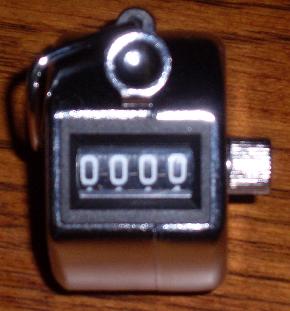
A small metal tally counter with a button on top and a window showing four zeros
A tally counter like this clicks up by one each time you press the button. It can count up to 9 999. Photo: Scottinglis, public domain, via Wikimedia Commons.

Counting with base ten blocks

Base ten blocks help you see big numbers. Ten ones make a ten (a rod). Ten tens make a hundred (a flat). Ten hundreds make a thousand (a big cube).

If you have 2 thousand cubes, 3 hundred flats, 1 ten rod and 6 ones, the number is 2 316.

To find a missing number in a sequence, first find the jump. In 5 200, 5 300, ____, 5 500 the numbers go up by 100 each time, so the missing number is 5 400.

Try it

TRY ITPlace-value builder

Press + and − to add or take away thousands, hundreds, tens and ones. The builder shows your number in numerals, in words and in expanded form.

TRY ITCounting challenge

Choose a game. Tap the right answer. Then press Next question.

Let’s practise

Work out each one in your copybook. Open Hint if you are stuck, then open Show answer to check your working.

1. Count on by ones. Write the next three numbers: 5 997, 5 998, ____, ____, ____

Hint

After 5 999 comes a new thousand.

Show answer

5 999, 6 000, 6 001.

2. Count back by tens. Write the next three numbers: 3 030, 3 020, ____, ____, ____

Hint

Take 10 away each time. What comes before 3 000?

Show answer

3 010, 3 000, 2 990.

3. Skip count by thousands: 1 340, 2 340, 3 340, ____, ____

Hint

Only the thousands digit changes.

Show answer

4 340, 5 340.

4. Write four thousand, two hundred and seventeen in numerals.

Hint

Thousands, then hundreds, then tens and ones.

Show answer

4 217.

5. Write 7 068 in words.

Hint

There are no hundreds. Say the thousands, then the last two digits.

Show answer

Seven thousand and sixty-eight.

6. Find the missing number: 8 600, 8 700, ____, 8 900

Hint

What is the jump each time?

Show answer

The jump is 100, so the missing number is 8 800.

7. A number has 9 thousands, 0 hundreds, 5 tens and 2 ones. What is the number?

Hint

Write a zero for the empty hundreds place.

Show answer

9 052.

8. (a) What number comes just after 9 999?
(b) What number comes just before 4 000?
(c) What number comes just after 6 099?

Hint

Count on or back by one.

Show answer

(a) 10 000
(b) 3 999
(c) 6 100

Quiz

Lesson quiz: 10 questions

Answer every question, then press Check my answers. Score 8 or more to earn the Number Counter badge.

Recap

  • When you count on past 999, 1 999, 2 999 and so on, you reach a new thousand.
  • Skip counting by 10, 100 or 1 000 changes the tens, hundreds or thousands digit.
  • Read big numbers from the thousands down: 4 521 is four thousand, five hundred and twenty-one.
  • Zeros hold empty places: three thousand and five is 3 005.
  • To find a missing number, work out the jump first.

Words to know

thousand
Ten hundreds. It is written 1 000.
Example: There are about one thousand pages in that big dictionary.
numeral
A number written with digits, like 2 316.
Example: The numeral for two thousand is 2 000.
digit
One of the symbols 0 to 9 that we use to write numbers.
Example: The number 7 068 has four digits.
sequence
Numbers in an order that follows a rule.
Example: 2 470, 2 480, 2 490 is a sequence that goes up by ten.
skip count
To count by jumping the same amount each time.
Example: We can skip count by hundreds: 300, 400, 500.

Try it at home

  • Find big numbers at home or outside: on a calendar (the year 2026), a car number plate, a receipt or a sign. Read each one aloud to an adult.
  • Mini project: make a counting strip. Start at 1 900 and count on in tens to 2 100. Write each number on a strip of paper and hang it on the wall.
  • Play “What comes next?” One person says a number and a jump, like “3 400, jump 100”. The other says the next three numbers.

Test tips

Tips for class tests

  • Always check how many digits your answer has. Numbers from 1 000 to 9 999 have four digits.
  • When writing a number from words, write a zero for any place that is not mentioned.
  • In a missing-number question, check the jump between two numbers you know before you fill the gap.

For parents and teachers

After this lesson, your child should be able to:

  • count on and back by ones, tens, hundreds and thousands up to 10 000, including across a thousand (for example 2 998, 2 999, 3 000);
  • read and write numbers to 10 000 in numerals and in words;
  • find missing numbers in a counting sequence.

Ask your child to read numbers seen every day, such as prices and the year. Most mistakes happen when crossing a thousand (999 to 1 000, 4 999 to 5 000), so practise counting on and back around those numbers.

Quiz scores and badges are saved only in this browser on this device. Nothing is sent anywhere. If the browser data is cleared, or another device is used, the badges will be lost.

Previous: Standard 3 Maths: start of the course
Next: Place Value and Expanded Notation – Standard 3 Maths
Course: Standard 3 Maths

Updates

2026/11/26
– Answers are now read aloud when you tap them.

2026/11/17
– Made read aloud work on more phones.

2026/11/03
– First version of this lesson.

Attributions to media used in this post:

Queens Park Oval Trinidad.jpg – Dominic Sayers from London, England – CC BY 2.0 (via Wikimedia Commons)

Mechanical Tally Counter.jpg – Scottinglis at English Wikipedia – Public domain (via Wikimedia Commons)

© 2026 Vedesh Kungebeharry. All rights reserved.